By Lisa Cutts
Bodyboarding is the most guaranteed way of having fun in the sea. It’s a stepping stone to surfing or a sport in itself. Whether it’s riding white water waves to the beach while giggling or getting jaw clenching barrel at a shallow reef. It comes in many forms and if you haven’t tried it, now’s your chance.
Any new sport may at first glance seem a little intimidating, the unfamiliar environment, the jargon and getting the right kit may put your head in a spin, but don’t worry: getting started with bodyboarding is way easier than you think.
It is one of the most easily accessible water sports for women of any age or ability. Whether you are new to the ocean or have already dipped your toes in by having tried something else. Bodyboarding will help you develop strength, fitness and confidence while having lots of fun.
From choosing your first board and essential gear, catching your first wave and quickly progressing, ironing out the common beginner mistakes we can point you in the right direction. Know where to ride, how to build confidence and stay motivated enabling you to really enjoy your new found addiction and the time you have in the water.
5 Reasons Why Bodyboarding Is the Perfect Sport for Women
Bodyboarding is the perfect sport for women, combining accessibility, rapid progression and physical benefits.
- It doesn’t require an ideal body type or age.
- It is low impact compared to many other sports, so puts less strain on your joints whilst building full body strength.
- A stable prone riding position makes it less complex than getting to your feet.
- As you can catch waves from your first session it is a great confidence booster, helping to eliminate any preconceived fears.
- Being in the water and having fun can also have mental health benefits helping to reduce stress and anxiety, increasing self-esteem and promoting relaxation.
Many women fall in love with it as they learn fast, improve steadily, and feel capable early on.
So, you want to give it a go. How do you start?
Do you have friends who are already hooked and need to see what they are always talking about or have you stumbled across inspirational images of riders navigating crystal clear waters, highlighting the adrenaline and sheer beauty of this wonderous sport.
A bit of simple research on the kit you will need will get you on your way.
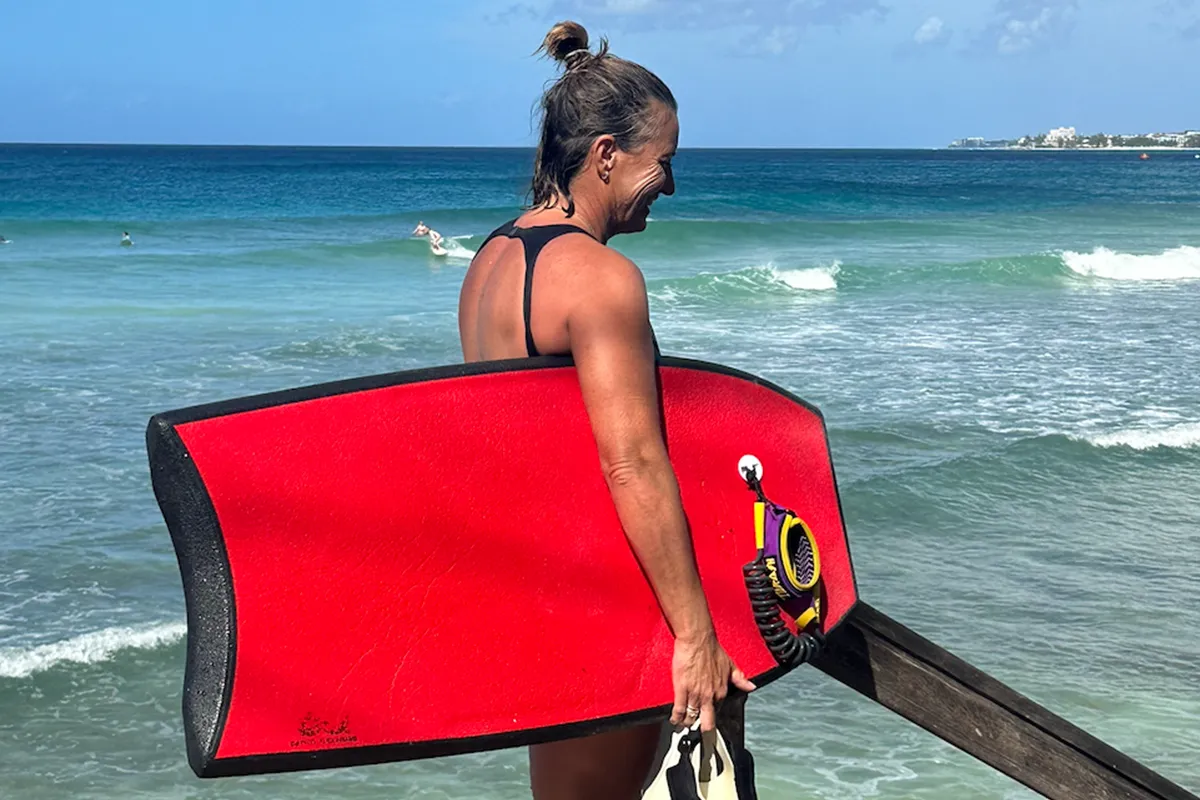
Essential Bodyboarding Gear for Women
Choosing the right bodyboarding equipment makes learning easier, safer, and more enjoyable.
1. Bodyboard
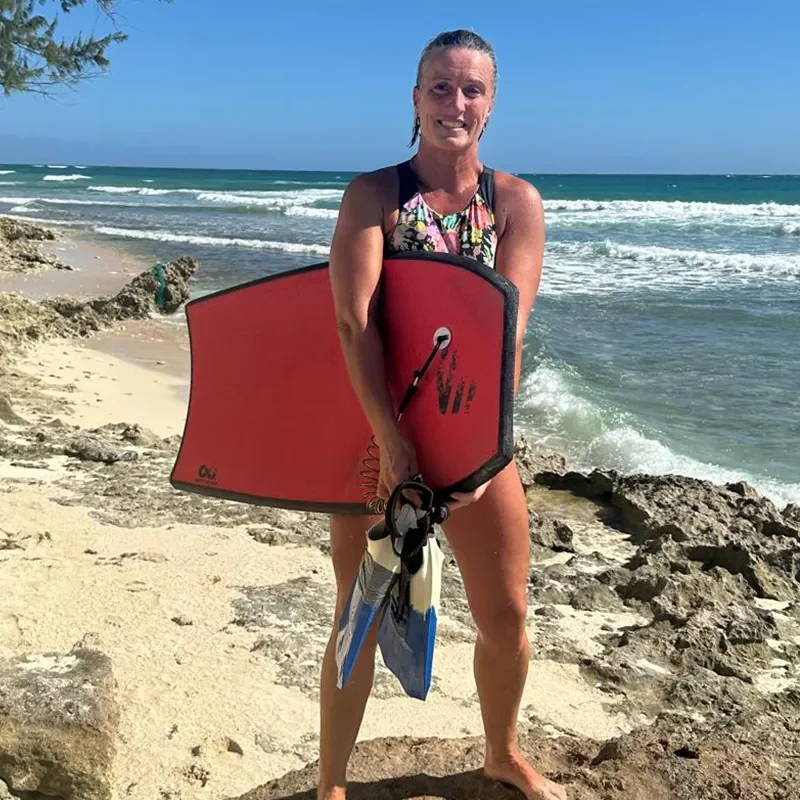
Boards come in a variety of sizes measured in inches. The length should be between your knee and your chin when held up in front of you, choosing a wider board for heavier riders. Bodyboard Size Guide
Buy cheap buy twice, it’s worth saving up and getting a top-end board. The right board will be easier to ride and will be better constructed, meaning your riding will progress faster and itwill have a longer life span.
The foam core is the key ingredient in the make up of the board and determines its overall performance. There are two main types Polyethylene (PE) also known as Dow and Polypropylene (PP.)
PE foam is built for colder waters giving you more control as it is heavier and more flexible. However, it has less memory than PP boards meaning that it does not return as easily to its original flex and shape.
Flex is crucial as it helps the rider to stay in control on the wave and it absorbs impact. The speed that a board ‘recoils’ back to its original shape, when flexed will have a direct impact on how much speed you achieve when riding it.
PP boards work better in warm waters, but are also often used in colder water locations, particularly by experienced riders. The polypro boards are lighter and stronger and therefore stiffer and faster. The PP core offers great buoyancy and durability.
If you are buying a second-hand board, check out the rocker.
Rocker is the curve or bend of your board. It is not good to buy a board that has a lot of rocker as this will cause you to ‘push’ water when riding along on the wave and makes riding harder. Ideally you want a nice flat board with just a little lift on the top 8-10 inches.
Also look out for brands that offer women-specific or lighter boards for smaller frames. The best on the market that we’ve found is Vicki Reale’s signature board from Ebodyboarding.
If you can, try a few different boards, maybe your friends have bought one you can test drive. If you sign up for a Women’s Bodyboard Weekend you will get matched with the right board for you and if needed you can try out others. Ladies Weekends – Bodyboard Holidays
Putting surf wax on your bodyboard will help stop you from sliding off, especially when it is new. With a new board, always give it a wipe down to clean off any chemical residue. Then apply wax to the key areas where your hands, stomach and chest will go. The corners of the nose, the deck (top of board) and where your elbows and forearms go.
2. Bodyboard Leash
It is important to always wear a leash to stay connected to your board. Should you ever get into difficulty in the water it is essential to keep hold of your board as it is your primary flotation device.
Leashes come as a wrist or bicep attachment with a Velcro closure system. The better ones have swivels which ensure that it doesn’t get tangled. Wrist leashes are ideal for beginners.Bicep leashes offer more control as you progress. Buy a good quality leash as it could be your lifeline!
3. Swim Fins (Essential)
When starting out it is best to give it a go without fins as they can throw you off balance whilst entering the water. Just jump on to oncoming whitewater waves and when you get the timing right you’ll hurtle towards the beach.
However, fins do offer a huge advantage, so if you are used to using fins then go for it as they will provide propulsion, control whilst riding and increased wave-catching ability.
Fin choice is very much a personal preference and it is important to choose a pair that feel comfortable, with a soft foot pocket and the length of blade that is right for you.
Shorter blades enable a quick explosive kick and the ability to change direction fast. Longer blades can be useful for longer paddles giving you good propulsion.
A pair of fin socks will help to prevent rubs and keep your feet warm in the colder months. Make sure that when you try fins on to buy you try them with socks if you intend to wear them all year round.
Fins can be really frustrating to get used to at first but stick with it as when you are comfortable with them your wave catching ratio will go through the roof. You’ll soon wonder how you ever manage without them. Follow these tips for great paddling techniques:
The key to getting the right fins is that comfort is king!
4. Wetsuit
To bodyboard in the UK a wetsuit is essential all year-round. Developments in wetsuit technology mean that they are now made from much lighter and flexible materials. The type of stitching used also plays a huge part in water resistance and wetsuit warmth.
Flatlock stitching allows more water through the seams while blind-stitched provides more of a watertight seal.
Liquid seal seams use a glue rather than stitch and there are all kinds of layers of insulation material that add warmth to higher end suits such as Firewall and Thermowall.
The thickness of neoprene required is usually 3/2mm for Summer, 4/3mm for Spring and Autumn and 5/4mm for Winter plus boots, gloves and a hood. Fit is more important than brand name, trying on different wetsuits to get a snug but not restrictive fit is advisable.Buying online can be tricky so try to visit a surf shop.
There are also different closure systems, the traditional back zip, a front zip and even zipperless. Your budget will determine how you choose but remember keeping warm is one of the most important things when out in the water.
Going into a shop and talking to an assistant who is knowledgeable can get the most out of your budget.
More advice on equipment here:
5. Optional Extras
- Changing robe – useful for whipping all your kit off without everyone catching an eyeful.Also beneficial on colder days when you dread getting out of your toasty wetsuit.
- Zinc sunscreen – which will stay put on your face on those long summer sessions.
- Changing mat/bucket – makes it easier to pull off your wetsuit without getting gravel and dirt all over it and keeps it from soaking everything else in your car.
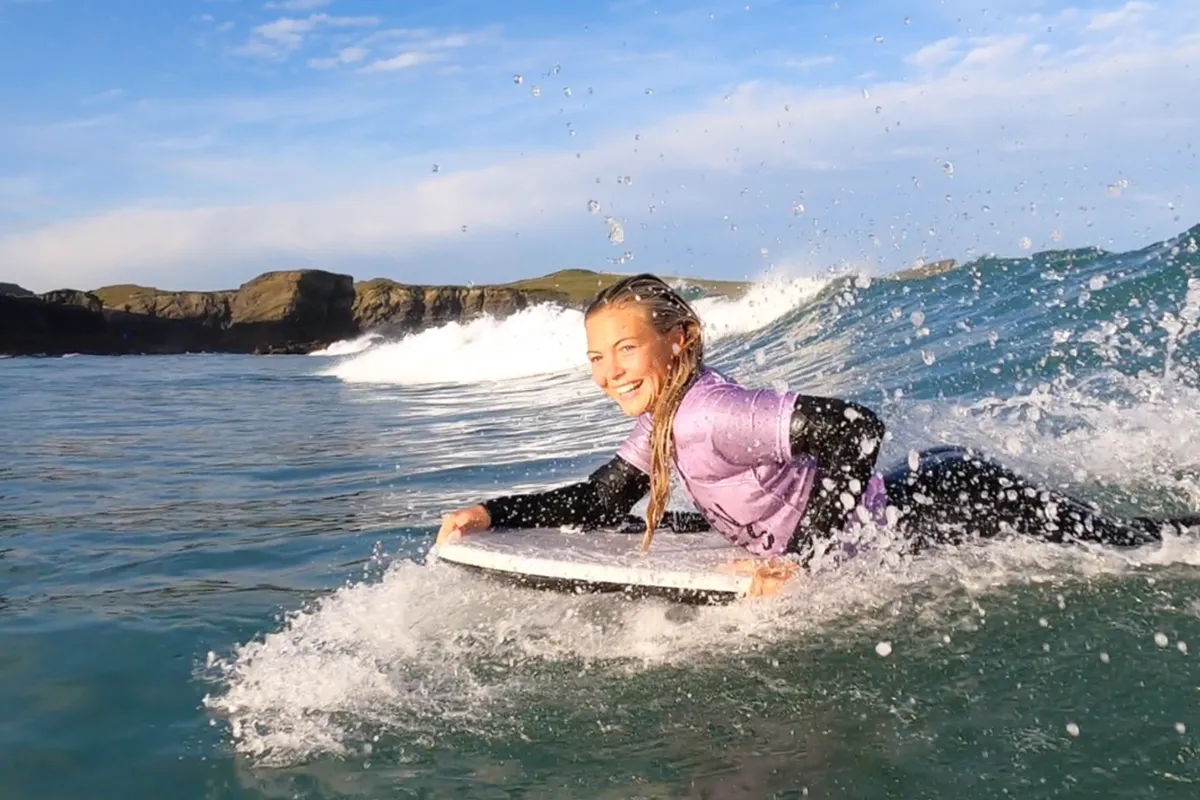
How to Catch Your First Waves Bodyboarding
Learning how to catch your first wave is one of the most exciting moments in bodyboarding.
Step-by-step guide:
- Start in the whitewater. Broken waves are safer and more predictable for beginners. When you go into the water have your board to the right side of your body tucked into your hip. The nose of the board pointing out to sea with your left hand on the corner of the nose and your right hand on the far side rail about half way along. As the waves hit you turn your body side on and force yourself and the board through the wave. Stay strong and be aggressive so that you are not pushed back. Once you reach waist depth you can get ready to launch into a wave using a skimming type motion.
- Turn and point the nose of the board to the shore. Watch the wave approach as you need to time your launch for when the wave hits the tail (back) of the board, making a smooth dive forward. The board should sit on the water and a big push through the legs will help you to glide into the wave on the board.
- Correct body position is important to stop you from nose diving (lying too far forward and going over the front) or missing the wave by lying too far back, causing drag and slowing yourself down.
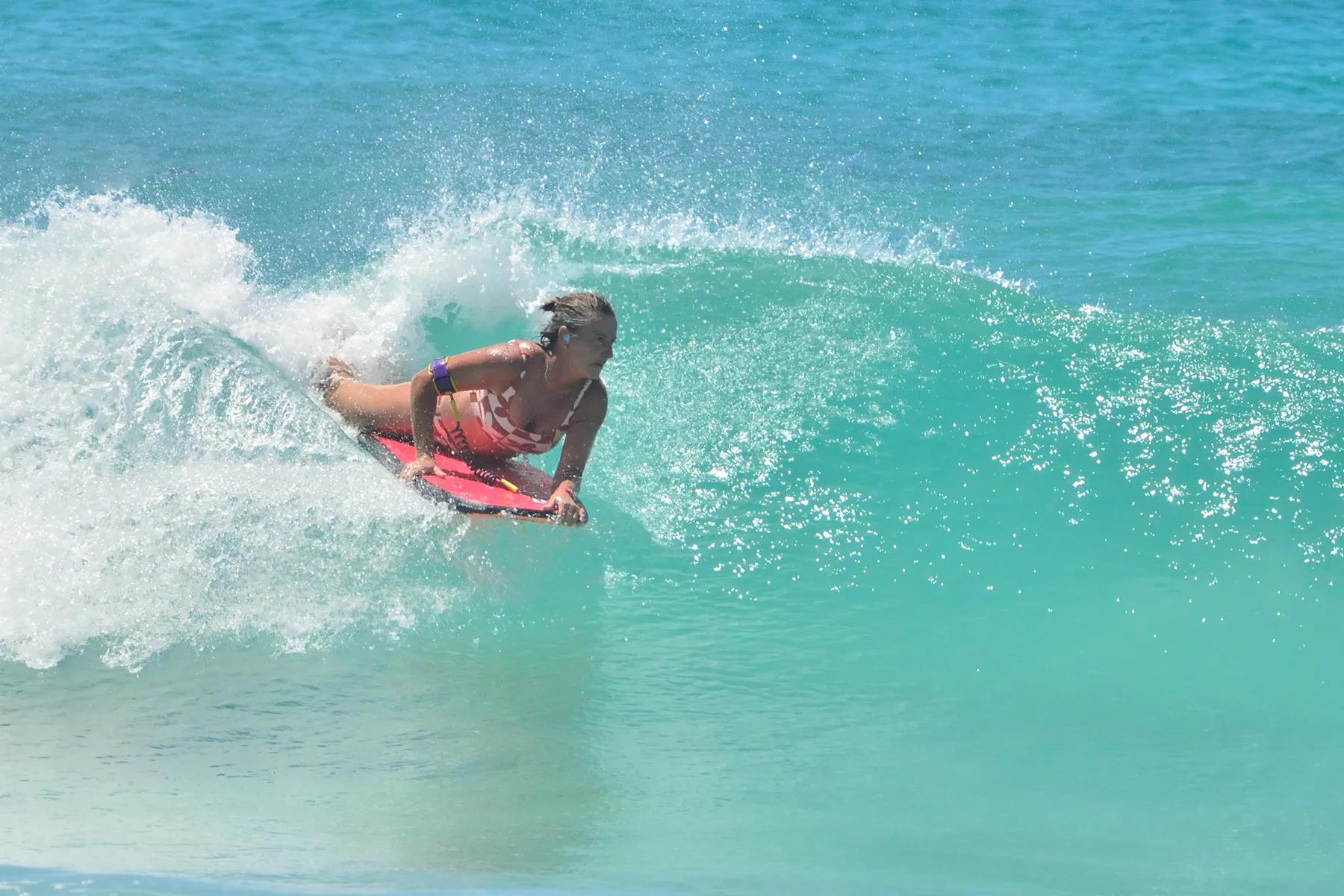
Your body needs to be shoulders and upper torso in the front third of the board, hands on the front corners of the nose, head up and back arched with elbows planted firmly on the board making a 90-degree angle. In this position your legs will come out of the water as you have pulled your body up on the board creating less drag. The arched back will help you gain speed. If you lie flat and your elbows stick out you will find it harder to keep control and you will slow down and come off the wave.
Rob Barber keeps it simple in this short video:
Why not get yourself on to a Women’s Bodyboard Weekend, where you will be guided step by step on all things bodyboard and into catching your first waves. Ladies Weekends – Bodyboard Holidays
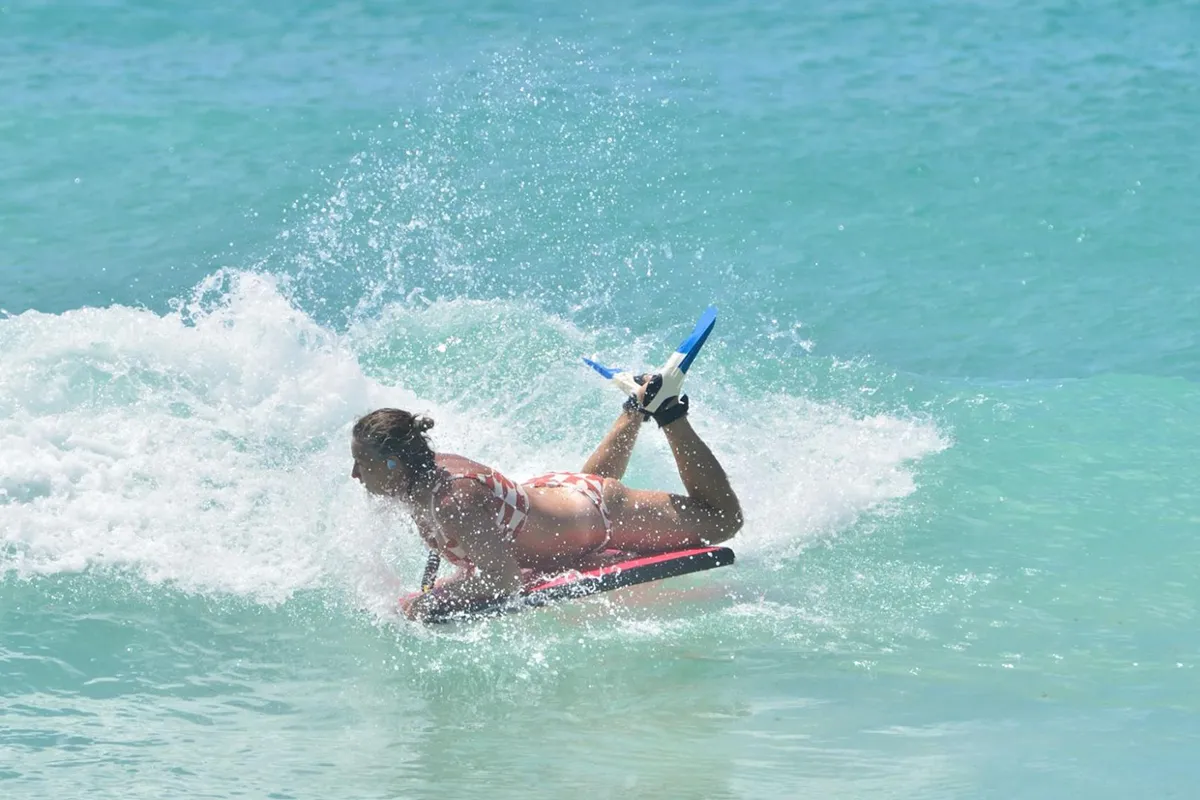
How to Progress Quickly in Bodyboarding
Consistency is key!
You will make progress in your bodyboarding by being consistent and not rushing into more challenging conditions too soon.
Tips to improve faster:
Even if you can only get in the water for short sessions try and get in there regularly.
Observe – Watch the ocean before getting in there. Look where the best spot is. Go to a lifeguarded beach, where the best conditions will be in the red and yellow flagged area. If you are at an unfamiliar beach check where is easiest to get in and out of the water safely and if there are any rips or rocks to be aware of. In the UK, surfers aren’t allowed in the red and yellow flagged area so you share the waves with just swimmers and other bodyboarders which makes it nice and safe.
Go with others – experienced friends who can give you tips or just friends who are at the start of their learning journey, either way it’s great to share the stoke! Consider taking a lesson or signing up for a Women’s Bodyboard weekend, which can really boost your knowledge,confidence and riding, meeting like-minded women and having fun at the same time.
Analyse your performance – If you have someone who likes to stay on land get them to film your waves and watch them back. See what you do well, celebrate the small wins and note where you could improve. Those special moments of glory can really boost your confidence and self-esteem.
Practice kicking – having a strong kicking technique will make your sessions so much easier as you become more efficient at paddling out to the waves and then catching them. Developing your stamina will help you to feel stronger in the water.
When the weather and conditions are not favourable spend time doing strength and mobility work that can help you get stronger for your next water sessions. Even practice body and hand positioning on your board on land, this can be really useful when you start to trymanoeuvres and need to change your positioning smoothly.
Watch tutorials on You tube that cover all the important basics to help you get started and make progress. Learn to angle your take-offs left and right so that you start to ride across the wave and not just straight to shore.
Common Bodyboarding Mistakes Beginners Make:
- Know your limits – don’t go out in conditions that are too challenging. Pushing yourself too soon can set you back, knocking the confidence that you have built.
- Not wearing fins – once you have passed the ‘jump launch phase’, pushing off the ocean bottom, fins will help you to get out through the waves more easily and then help you to catch them. So don’t hesitate to try some as soon as you feel ready.
- Positioning – Lying too far forward on the board can cause you to nosedive or being too far back on the board will cause drag and slow you down.
- Holding the board incorrectly – remember to have one hand on the corner of the nose and the other around half way down the opposite rail.
- Comparing your progress to others around you is not good as everyone progresses at their own speed.
- Avoiding common beginner mistakes helps build confidence and prevent injuries.
Bodyboarding Safety and Etiquette for Women
Essential Safety Tips:
- Don’t bodyboard alone, especially at unfamiliar beaches. Choose a lifeguarded beach.
- Learn how to identify rip currents – often choppy water with foam or debris flowing away from the shore moving steadily out to sea. If you find yourself stuck in one try to stay calm and save energy. If you can, paddle parallel to the shore to escape the pull out to sea. When you are free from the pull, head to the shore at an angle.
- Never turn your back on the ocean – always stay aware of what is happening around you, conditions can change rapidly.
- Know your own limits and rest when you need to, it is surprising how much energy you use in the water!
Bodyboarding Etiquette
Understanding surf etiquette helps create friendlier, safer line-ups:
- Don’t drop in on someone already riding a wave – just like driving you shouldn’t pull out on someone already on the road. Learn to understand if a wave is breaking left or right and who has priority. (A surfer who is closest to the breaking part of the wave)
- Take turns and avoid snaking (paddling to the inside of someone already in position and stealing the wave)
- Keep control of your equipment and try not to discard your board as it could cause injury to others.
- If you make a mistake apologise, everyone has them, especially when learning.
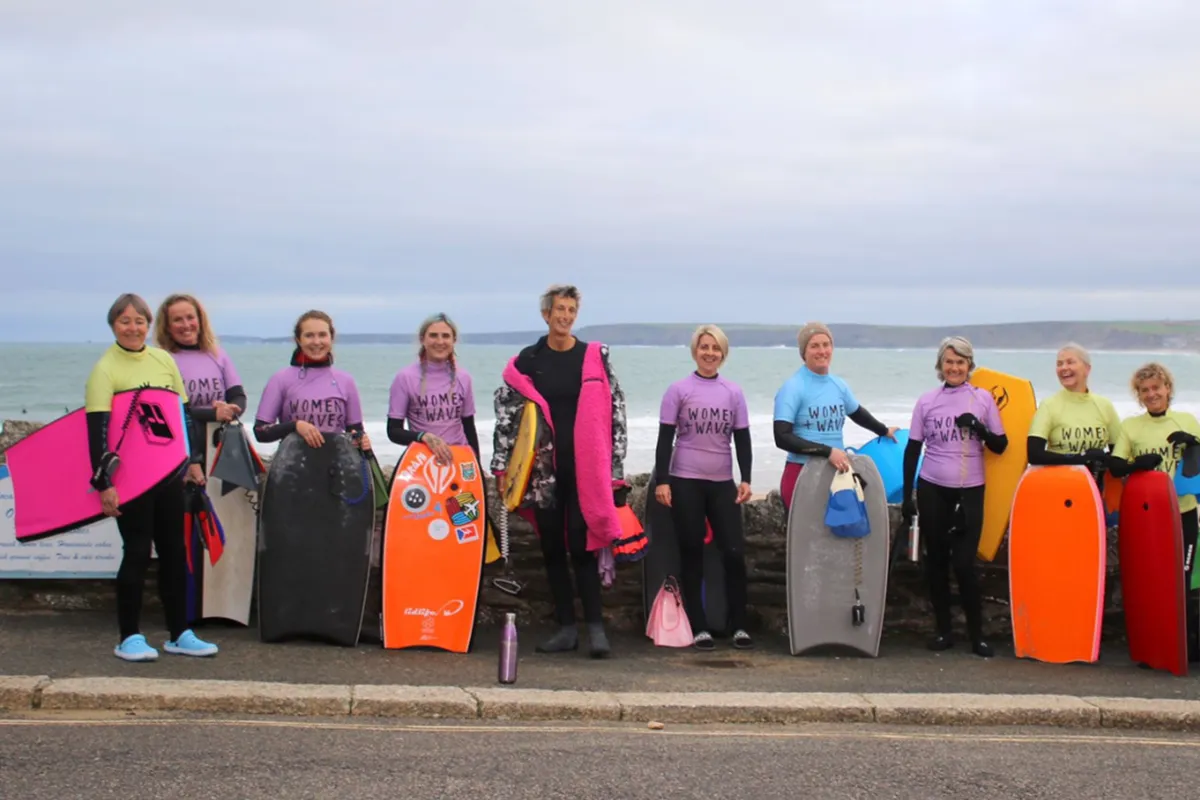
Building Confidence in the Water
Ways to build confidence bodyboarding:
- Learn how waves and tides work; read up, watch videos, get to know your local beach.
- Go to beginner friendly beaches. Use surf forecast sites/apps to learn about the beaches you want to use and the conditions that are best for them. To start with you will want more gentle waves that are not too big or powerful.
- Depending on the beach structure some beaches will produce better waves at low or high tide and have different wave formations depending on the time of day. The beach can change over days, weeks or months with weather and storms. Web cams are great for checking out the surf conditions regularly and noting what the weather and tides are doing on that day in relation to what the surf forecast says. SURFLINE.COM | Global Surf Reports, Surf Forecasts, Live Surf Cams and Coastal Weather
- Celebrate small wins; a nice wave, paddling out more easily, a bigger wave than before, feeling less tired after a session.
- Surf within your ability level and be realistic.
- Connect with other women bodyboarders, share the stoke and cheer each other on! Join one of the overseas trips like the Women and Waves to Ladies Only Morocco bodyboarding or our All Female Nicaragua bodyboarding holidays.
- Trust that confidence grows session by session. Practice body and hand positioning on dry land so that it becomes familiar.
- Have equipment that works well, is the right size and does its job properly. Make sure that your fins are comfortable or they will spoil the fun.
Take a look at my other blog for more information on staying surf fit and building confidence.
Staying Motivated: The Right Bodyboarding Mindset
Bodyboarding progress can be up and down. Some days will feel incredible; others will feel frustrating.
To keep a healthy mindset:
- Set realistic goals for yourself.
- Let go of comparison, your learning journey is unique to you.
- Accept that wipeouts are a part of learning, laugh them off!
- Focus on the enjoyment, how it makes you feel.
- Commit to the process, maybe even record your progress over time, which can be a powerful motivator.
- Keep on reflecting on the fact that while you are in the water you are disconnected from devices, in nature and generally smiling and having fun.
Tips to Stay Inspired and Have Fun Bodyboarding
- Join women’s surf or bodyboarding groups
- Travel to new beaches
- Watch female bodyboarders online
- Keep a surf journal
- Celebrate every wave, no matter how small
Fun is the foundation of improvement, find like-minded women to share this with and there will be no holding you back!
Final Thoughts: Why Women Belong in Bodyboarding
Bodyboarding is an exciting way for women to build strength, confidence, and connection with the ocean. All the kicking can give you a great bum as well! It’s easily accessible, rewarding, and endlessly fun – whether you’re riding your first whitewater wave or learning advanced manoeuvres. All you need is a board, a wetsuit, some fins and the willingness to try.
Come along on a bodyboarding coaching weekend or surf adventure to Morocco or Nicaragua, and enjoy learning, improving, and sharing the waves with a supportive community – Everyone’s welcome!
What are you waiting for? The ocean is waiting.
Want more surf tips and retreat updates? Subscribe to our newsletter and join our community of wave riders.