Why Surfing Brings Us Joy (And Why Fear Holds Us Back
Surfing and Bodyboarding, to me and many others is considered as pure aquatic joy – the thrill of gliding down a wave, connecting with the ocean, such a natural setting provides us with a surge of feel – good chemicals.
Our endorphins drive our feelings and emotions, creating a euphoric sense of pleasure and elation. When dopamine, the “feel-good” chemical, is released, it gives us instant joy and motivation – which keeps us coming back for more. And just like that… the surf addict is born!
But for many riders, fear can creep in and hold them back.
Whether it’s the thought of navigating a crowded lineup, surfing over reef, getting caught in a rip current, or even the rare but real stress of sharing the water with sharks, these anxieties are natural. The good news is that these fears can be managed and even converted into confidence.
Common Surfing Fears (And How to Overcome Them
We asked our community about their biggest fears and debunked them! Let’s take a look:
Fear #1: Crowds – Finding Your Flow in the Lineup
Nowadays with so many people enjoying our wonderful sport, surf spots can become busy and when surrounded by more experienced riders it may feel a little intimidating.
Our advice: Small steps to start, become more familiar with your local surf spot/beach. Take time to watch and identify which areas of the beach are more crowded. Choose a less crowded peak but also if you are a less experienced water user don’t be tempted to paddle out where it is empty as this could be due to there being a hole or a rip which makes it less safe. Always ask the lifeguard or source information online if there are none working on that beach. When you plan your route out try to paddle slightly wide of where people are taking off so that there is less chance of getting in the way. Once you are out back you can take time to watch and read how the waves are breaking and in your own time get yourself into the position you feel comfortable with. You do not have to be right on the peak, stay focused on the action and when people don’t make the take off and wipe out you will have the chance to take the leftovers. Little by little as your confidence grows you will find yourself amongst it, it may take a number of sessions but using this strategy can help you on your way to becoming more comfortable in a crowd.
Or, if you want crowd-free learning from the start, we run Women’s Only Surf Coaching Weekends at Great Western under our special licence, giving guests the space to focus on progression, confidence, and fun in a supportive environment.
Respect etiquette: Heeding the unwritten rules will keep you safer and helps reduce tension in the water. Over time, you’ll realise that most people are focused on their own waves, not judging yours.
Some spots get super busy at certain times of day, especially when the surf is good. Getting in the water for the early session can often help avoid crowds whereas at the end of the day all the local groms and everyone who has just finished work will be hitting the water for their salty fix. Similarly, weekends can get crowded and have a different vibe. Getting to know the quieter times at the break that you visit is really important. Some sacrificing quality of waves for a reduction in crowds is a wise decision to make. Here is a quick video on how to surf in a crowded line up.

Fear #2: Reef Breaks – Respect, Don’t Fear
Reef breaks can produce powerful, perfect shaped conditions as their fixed rocky bottoms create consistent and predictable waves, but the shallow bottom demands caution and can be quite daunting.
Our advice: Know your tides. On higher tides the water fills deeper over the reef, making it less shallow and reducing the risk of hitting the bottom.
Wear protection: To help prevent cuts consider wearing a wetsuit and reef boots.
Commit to your line: Believe in yourself, you are capable of making that take off, don’t hesitate as this can increase the chances of a wipeout. Visualise previous sessions where you have had a good surf and caught waves you were proud of!
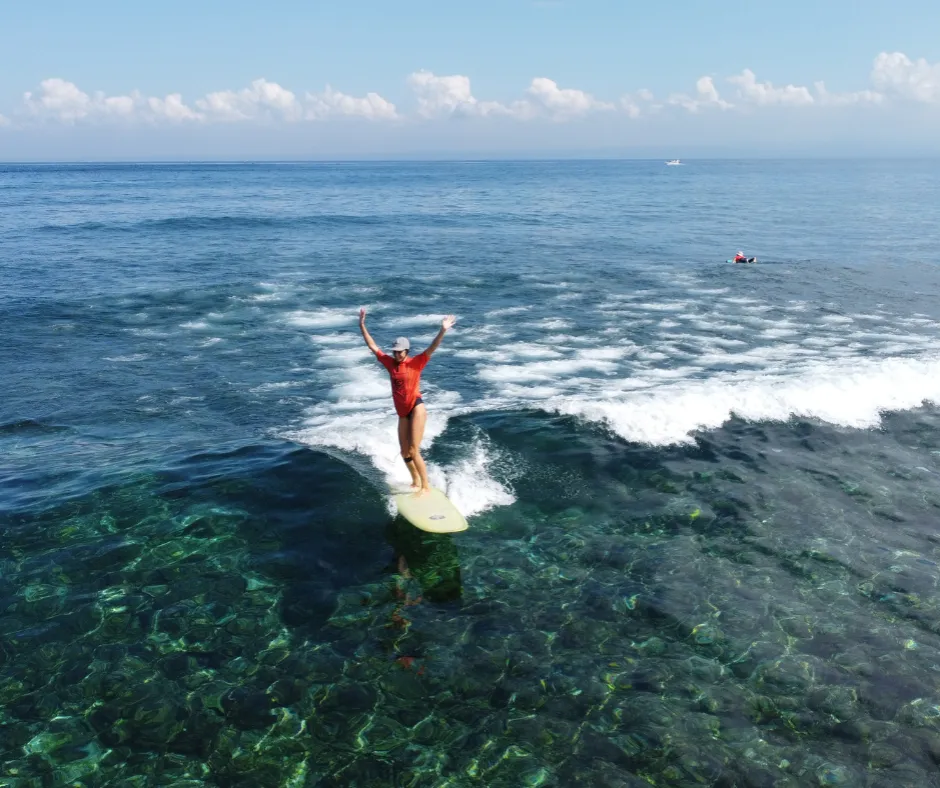
Fear #3: Rip Currents – Turn Panic into Power
Rips are one of the most common hazards for surfers and bodyboarders, but they’re also an energy saving tool if you understand them.
Our advice: Learn to spot them. Look for a channel of darker, calmer or choppier water with foam or debris moving away from shore. These are usually between breaking waves or near permanent structures like piers or rocks. Experienced riders can use rips as a conveyor belt to the lineup. If you have friends who are competent surfers, you can try this with them so that you know you are safe. Should you ever get caught in a rip and find it hard to get back to shore try not to fight it. Let the rip carry you out, just stay on your board and it will then loose its energy and you can then paddle parallel to shore to escape, before heading back toward the shore. Rips can become your ally as your knowledge and confidence grows.

Fear #4: Sharks – Keeping Perspective
This has always been a real fear for me. I don’t know why, but I think it may even have stemmed from watching the Jaws movies in my teenage years ….silly I know! Even though shark attacks are statistically rare, their predatory nature and the unknown of the oceans depths still put me on edge. Whilst playing in the UK waters I keep my eyes open for seals with big whiskers and huge barrel jelly fish but in tropical locations it’s a different ball game! To help manage these fears I…
Avoid dawn/dusk sessions in murky water and obvious spots where they are likely to be, for instance river mouths, which can be potential feeding grounds, where dead animals and fish flow downstream to enter the ocean or surf spots where the reef drops off steeply.
I remember paddling out to a more secluded break in Sri Lanka where you had to cross a deep channel of water and this freaked me out massively. I had heard stories of a shark fin spotting which was always in the back of my mind, and I couldn’t wait to get back to the shore. I guess I was young then and much less educated on the facts. For example, shark attack risk in comparison to other daily activities such as driving has a 1 in 3.7 million chance of death. Furthermore, sharks often bump into things to identify them, and humans are not typical prey. Understanding the low statistical risk can help you focus on the joy of the ride.
As the old saying goes “Safety in numbers”, sharks are less likely to approach a group so surf with others. If you see unusual fish activity or birds diving, maybe it is time to move to another spot! I am embarrassed to say that I have made a sharp exit from the water on a few occasions when I had thought I had seen something. Once in Hawaii, which turned out to be a coconut husk bobbing and another time in Sri Lanka where I thought I could see shadows deep below me. My partner was not happy that I forgot to inform him of my concerns before I sped back to the safety of dry land.
We also consider all aquatic life when selecting our surf destinations, to maximise safety and confidence for everyone in the water. If you’d like to experience worry-free, guided surfing in some of the world’s most beautiful locations, check out our Surf Holidays – where safety, coaching, and fun go hand in hand.
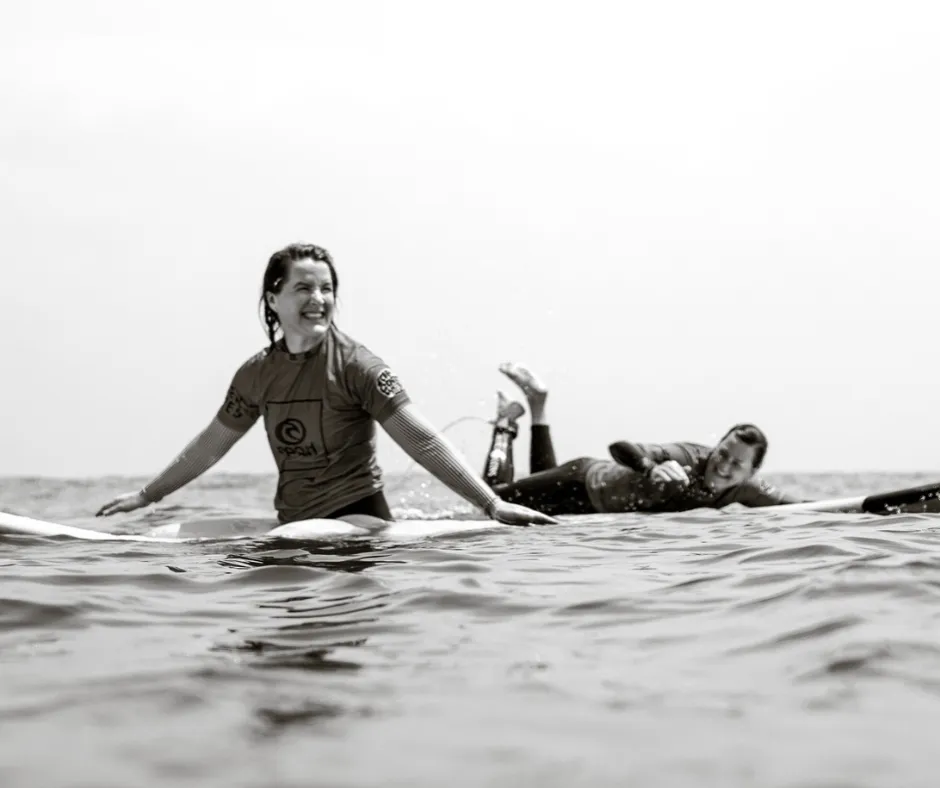
Fear #5: Building Ocean Confidence
Fear often comes from uncertainty in response to perceived dangers or threats. The more you can learn about the ocean, the more you replace fear with respect.
I remember being on holiday in Spain with my family, neither of my parents could swim and I was standing in shallow water in the sea. I took a few steps forward and was suddenly out of my depth and couldn’t swim. Apparently, I had been standing on a sand bank and the panic when I dropped off the edge was real. It may not have even been that deep, but it was enough for me to nag my parents to get me to our newly opened local swimming pool on our return home. I think this experience also ignited my curiosity about the ocean and wanting to be around it more. As my water confidence in the pool grew I became more inquisitive about the ocean and how I could play in it. I remember lying on a polystyrene board and catching waves in the shallows with my grandparents who lived near the beach. My incremental ocean experiences, swimming and playing in the waves, feeling their power and learning how to respond built me up to feeling more confident in this environment. In time adding in a surfboard felt like an exciting challenge.
When I first started surfing and it was bigger than I anticipated I used to wonder about what it would be like to deal with a tsunami. The chances of such a force of nature occurring being extremely slim. Not knowing much about them then I was naive to think that surely I could just surf it, and be safe. Little did the 16 year old me realise that many years later I would actually be running from the Boxing Day tsunami as I sat and watched the surf while waiting for my breakfast in Sri Lanka – More about this in our next blog. In the meantime, try these 3 breathing techniques for staying calm in the surf.
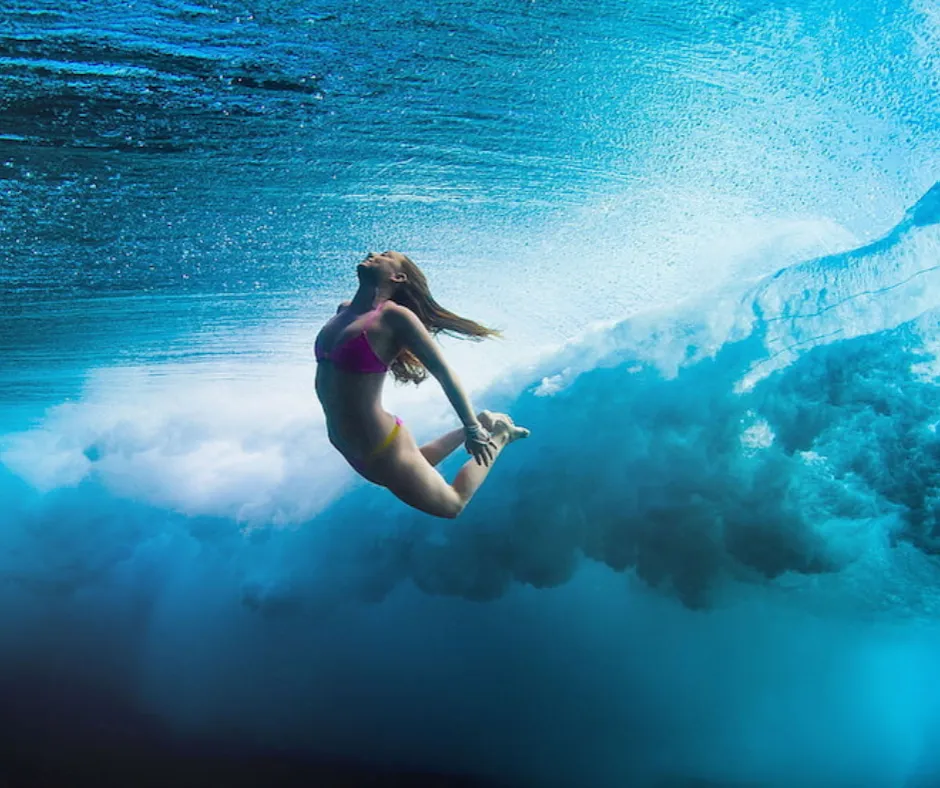
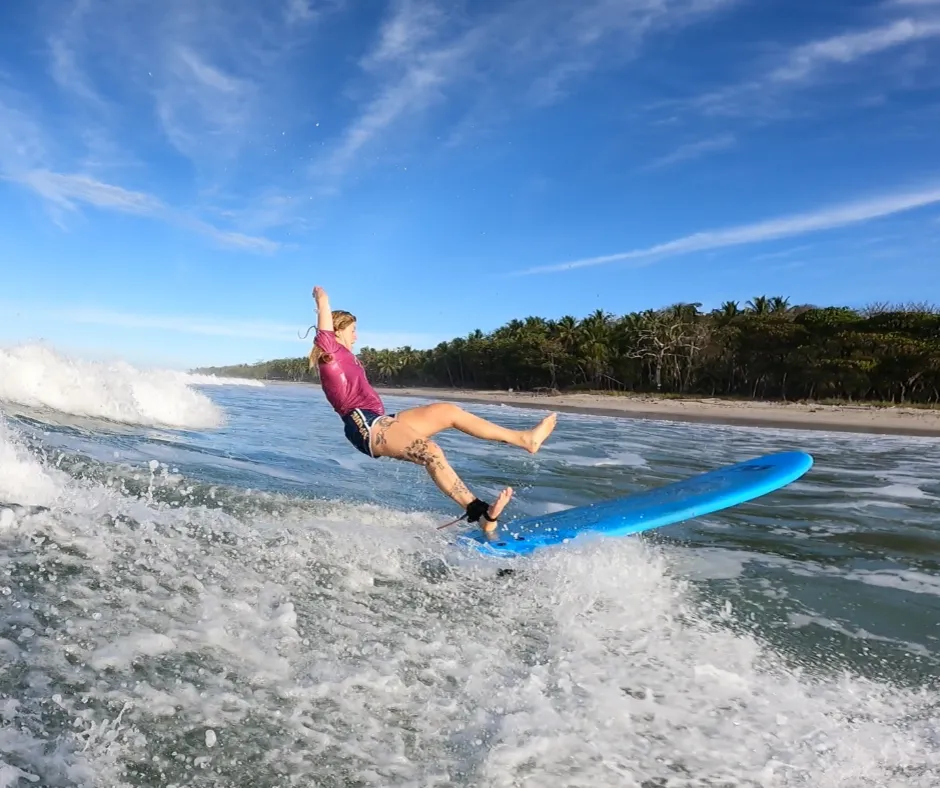
Fear #6: Wiping Out and Getting Hurt
Let’s be real – this is one of the biggest fears in surfing, and it’s a valid one. No one wants to wipe out, get held under, or come out of the water with a few extra bruises. But the truth is, wiping out is part of surfing, not a sign that you’re doing something wrong.
Most injuries don’t come from falling, they come from panic, poor positioning, or not knowing what to do when things go wrong. The more you understand the ocean, your board, and how to fall safely, the less scary wipeouts become. Learning how to protect your head, relax your body, and go with the wave (instead of fighting it) makes a huge difference. We cover this on all our Women + Waves retreats, helping guests feel confident about wiping out and sometimes even have fun doing it!
Confidence doesn’t come from never wiping out, it comes from knowing you can handle it when you do. With the right coaching, awareness, and practice, wipeouts become less dramatic, less dangerous, and a lot less frightening. And funnily enough, once that fear fades, you’re surfing usually improves too. Here are our 6 easy tips for handling wipe outs.
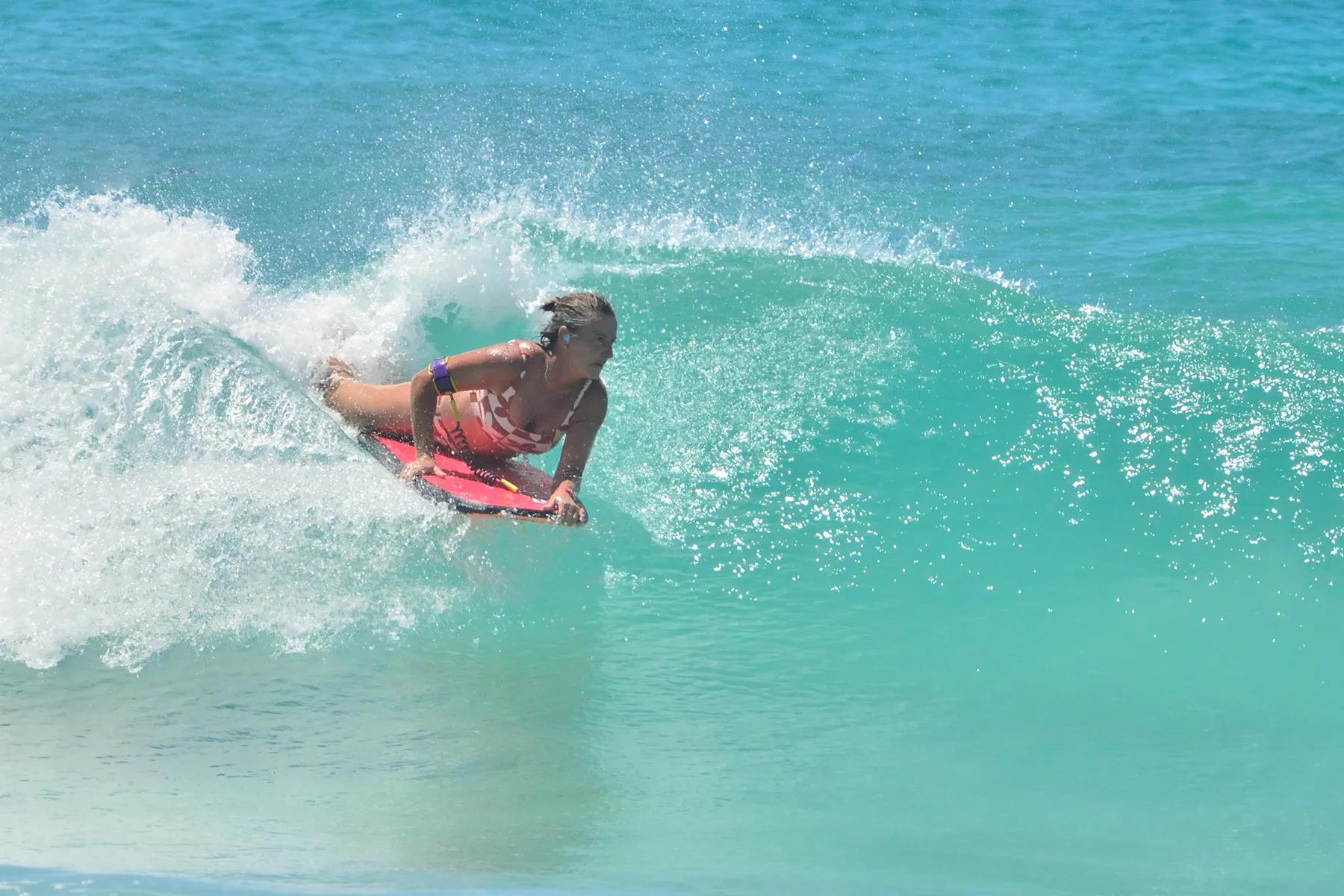
On our women’s bodyboard coaching weekends we often have ladies joining us who are completely new to the sport and apprehensive of the ocean environment. We support individuals to progress gradually, pushing their limits in small, manageable steps. We will often play in the waves to start and then build from there.
Take waves on the head, dive through them, steady yourself, float. When you feel ready, try and time pushing off the bottom into them and gliding toward shore, become one with the waves, making yourself as streamline as you can. Then try swimming into stronger ones that are about to break so that you are bodysurfing. All the time breathe and visualise, picture yourself riding with control. Make sure to celebrate small wins, every wave caught is a step forward.
Riding bigger waves: Sometimes we are out in the water, and the waves start to build in size. We may suddenly find ourselves in conditions we are less confident in. Over the years I have learnt that controlling my breathing in any situation that causes me stress, such as racing at surf lifesaving competitions, job interviews, or situations where you feel less in control really does work. There are several techniques that can be learnt and practiced so that they become second nature when called upon. You can read my story here.
To become more comfortable in bigger waves it is a sensible idea to build up over time. Gradually expose yourself to conditions that are a little out of your comfort zone. Watch what others do, where they paddle out, where they end up in the lineup. Don’t worry if you have days where you don’t actually make it out back, try and reflect on what stopped you. Was it your fitness? Was it your paddling or duck diving? You can then work on these in more isolation and get prepared for the next time you face similar conditions. I sometimes find that listening to some music I like to get a little pumped can help me get focused and in the right mind set for the session ahead!
Fear is not your enemy – it’s a signal that you care about your safety and your sport. By pairing knowledge with experience, you can turn that fear into focus, and that focus into freedom. The ocean will always demand respect, but it will also reward you with moments of pure magic.
- Start in less crowded areas and gradually build confidence
- Learn to read rip currents and use them to your advantage
- Practice breathing techniques before paddling out
- Wear protective gear on reef breaks
- Surf with others for safety and moral support
Ready to Overcome Your Surfing Fears?
Overcoming fear is part of surfing and bodyboard and we embed these skills in to each of our coaching weekends or international coaching holidays. Join us, let’s work through it together.
Want more surf tips and retreat updates? Subscribe to our newsletter and join our community of wave riders.
Watch more technique videos on our YouTube channel.