When life threw Lisa one of the most difficult challenges she’d ever faced, she didn’t have the luxury of perfect routines or endless motivation. What she did have was a decision: show up for herself, even on the days it felt impossible.
Surfing and bodyboarding had always been a source of joy, but during this time, they became something deeper a reminder of who she was when everything else felt shaky. The ocean became the one place she could breathe, reset, and feel strong again. Her fitness didn’t come from big heroic training blocks. It came from consistency, compassion for herself, and choosing tiny actions that added up.
Throughout my life I have always tried to stay fit for the sports I love and have always thought that this meant you had to do a lot! Trying to maintain the fitness to enjoy surfing, bodyboarding and the other ocean sports I do needs greater consideration now than it used to.
I know that now I am over 40 and post menopause, my body reacts differently to training and I need to really consider what will be most effective. The good news is that with the right training and mindset, staying surf-fit in your 40s and beyond is achievable. It doesn’t need to be super intense and break you, but it does need to be consistent and enjoyable.
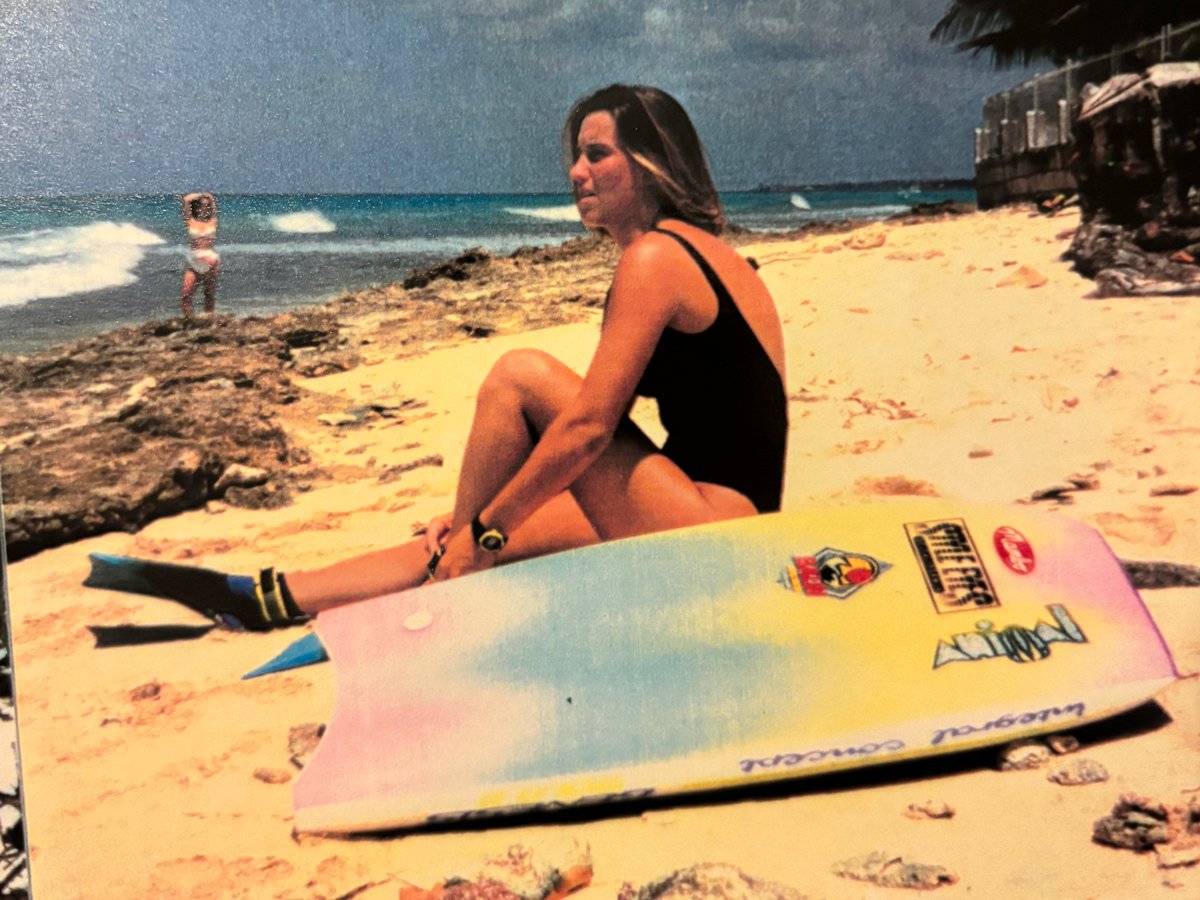
I need to set the scene as to how I have ended up writing this blog and my journey to becoming as 53-year-old fitness crazy, world champion water woman. Growing up on the South Wales coast and not actually being able to swim until I was about eight years old, the ocean had always felt like a forbidden treasure, or a danger that I should avoid at all costs. As I hit my teens the chlorinated lanes of the swimming pool became my happy place.
After becoming a swimming addict, I eventually discovered the confidence to venture into the wild Welsh sea, which soon became my new playground. Little did I realise that the murky water of Coney Beach, where I spent hours learning to surf would initiate my lifelong love of the ocean and the adventures it would take me on.
Back then, it wasn’t common to see many women in the lineup, but I didn’t let that faze me and after years of tagging along with the boys I finally felt like I fitted. Surf lifesaving also played a big part in shaping my confidence in the water. Those few summers spent hanging out at the Porthcawl beach clubhouse, helping with patrols, swimming and paddling in all conditions taught me an awareness and respect for the sea, along with an appreciation of the fitness that was required.
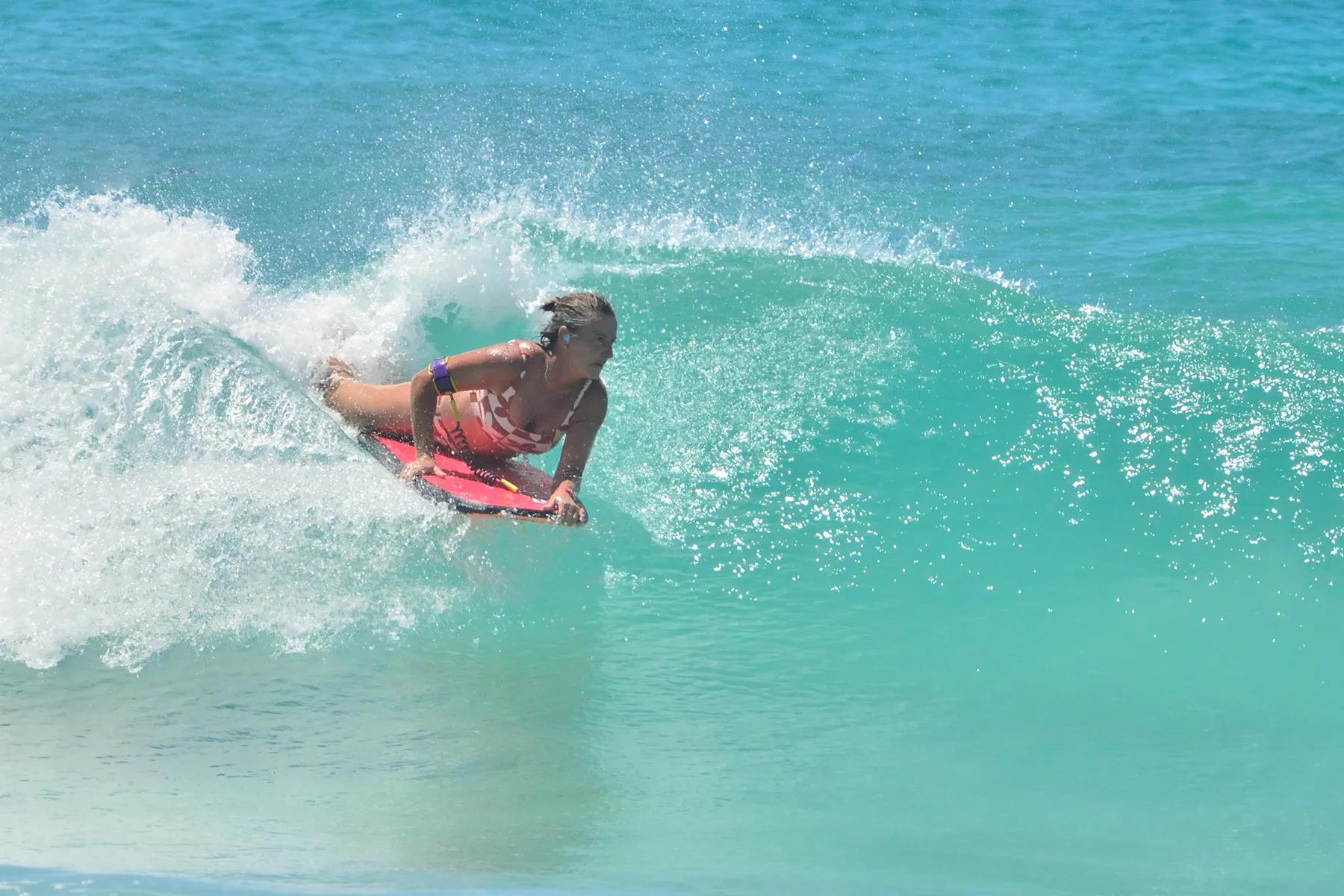
I naturally drifted into bodyboarding when it began to bloom in the UK. I was hooked immediately by the speed and thrill of riding waves for longer than I had managed to stand up and surf them, having struggled on a surfboard that was too small for me. The feeling of being close to the water and the sensation of flying along the face of unbroken waves had me addicted.
Competitive bodyboarding eventually pulled me to Cornwall. With its rugged coast, turquoise waters and far more consistent surf, I could be in the water all the time. This was ideal for preparing for competitions. From there, it became the norm to travel every winter, chasing warmer winter waves across Barbados, Sri Lanka, and even Hawaii. My fitness regime in those days was as many water hours as possible sprinkled with some swim training and running. If only I had known, then what I know now.
“I soon trained to become qualified as a surfing and bodyboarding coach. Keeping active through my work really helped me to maintain my fitness and flexibility, if you can take an active job, I strongly recommend it.”
Working and travelling, my regime was surf, sleep, eat, repeat, those days were spent mostly salty and sun soaked among the turtles and fish. I would be riding waves until I had nothing left in me and the sun had dropped beyond the horizon. Those tropical winters enabled me to consistently get in the waves and emulate the tricks that I had seen the guys performing. My competitive bodyboarding journey saw me snag first Welsh, then British and ultimately a European title which I won in the Euro Surf Championships at Thurso Reef in Scotland.
Survival of the Fittest
In my early 30’s I aged suddenly as I was diagnosed with cancer of the womb, rare for someone of my age. It came as a huge shock, given that I had always strived to live a healthy lifestyle and stay fit. Having been chopped open and undergone a total hysterectomy I was flung into early menopause. I had not been ready for this!
Being a very active thirty something year old and then physiologically suddenly getting stuck in the body of a fifty something year old scared me somewhat. It took a while for me to feel strong enough both physically and mentally to start any sort of training again. I probably didn’t do near enough research and just charged on trying to keep up with those around me. There was less awareness then around managing the menopause and I had been seriously naive to think it wouldn’t affect me as I was fit and too young!
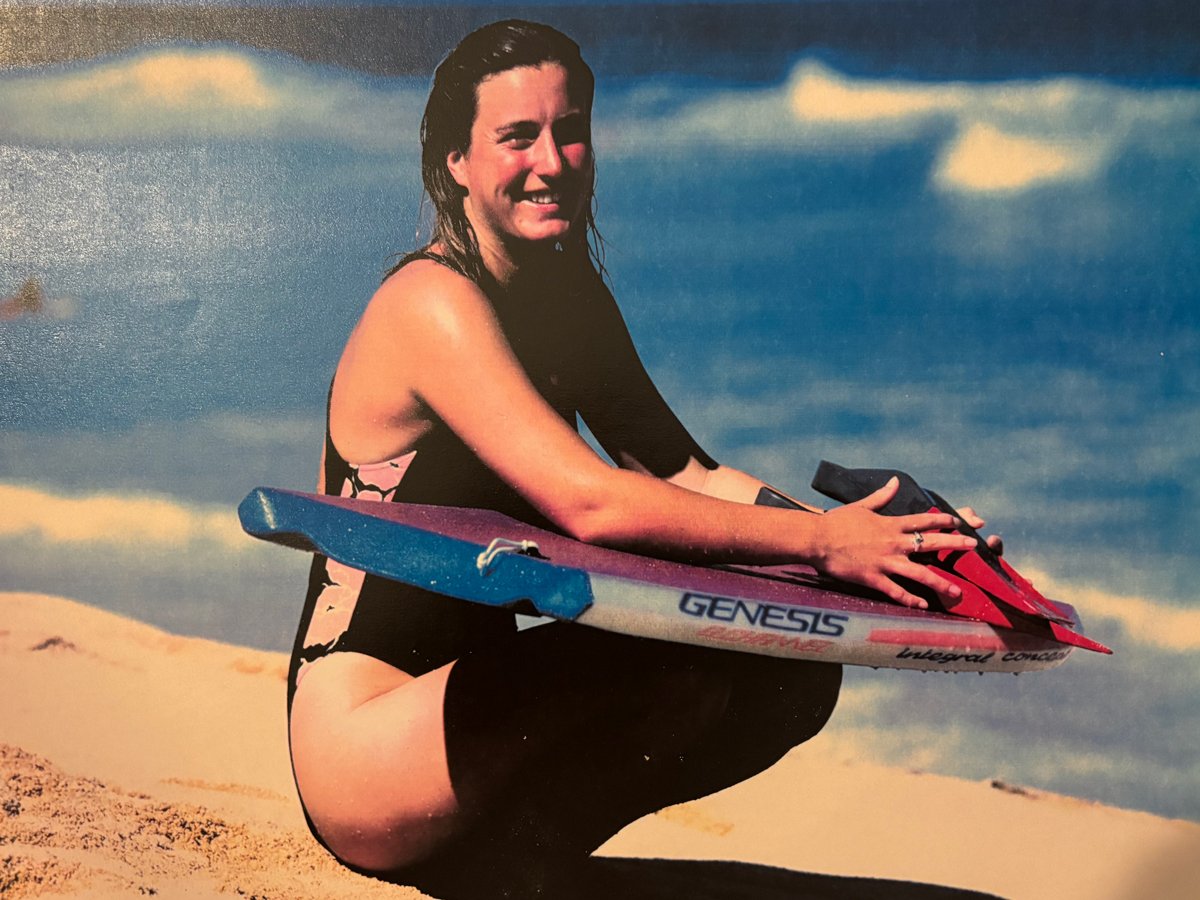
Fast-forward to life over 40 and I encountered another bump in the road as my marriage disintegrated before me and I was suddenly a single parent with a 4-year-old. To get through this phase the natural thing for me was exercise and to do something that would get me really fit and feeling good about myself. I knew the perfect challenge, a multi discipline continuous sport…welcome to triathlon. The swimming part came easy for me from my younger years but having done little cycling this was where hours in the evening were spent on an indoor turbo trainer whilst watching movies, as my son slept upstairs.
“It seems crazy looking back at the few years I spent racing triathlon series and at the peak of my newfound obsession actually completing a half iron man event – 1.2-mile swim, 56-mile bike and a 13.1-mile run!”
Into my late 40s and the ocean still had its magical hold on me. I needed a new challenge, and it was time to give surf lifesaving another go. I was a bit apprehensive as it had been 30 years since I had been a part of that community. I became totally hooked and my competitive urge drove me into racing in the masters division, throwing myself into a serious amount of training to be fit to do battle. This time training was a bit more varied and involved a few HIIT (High Intensity Interval Training) sessions each week. This was supported with swimming and paddling. Winning national titles in my age group I was naturally curious as to how I could do on a bigger stage.
Time to take on the World
I first decided to race at the European Masters Championships in 2019 in France. I really didn’t know what to expect but I had prepared well and put in the hard graft! I would say that my strongest events are Ocean Woman (which consists of three disciplines, board paddle, swimming and ski with some running between each leg) but I entered all the disciplines that I could, which meant I was in six individual events including Beach Sprints and Beach Flags.Then on top of that are the prestigious team relay and pairs events. My focus and commitment paid off starting with a win in the Board race beating the current European champion. It was all a bit bizarre as I had only arrived at Bologna airport that same morning and by teatime, I was a European Champion!
Over the next few days, I then went on to medal in every event I entered. It felt surreal and I suddenly found a new sense of confidence and belief in myself that I had never felt before. Buzzing with my success I started to think maybe I should give the World Championships a go.
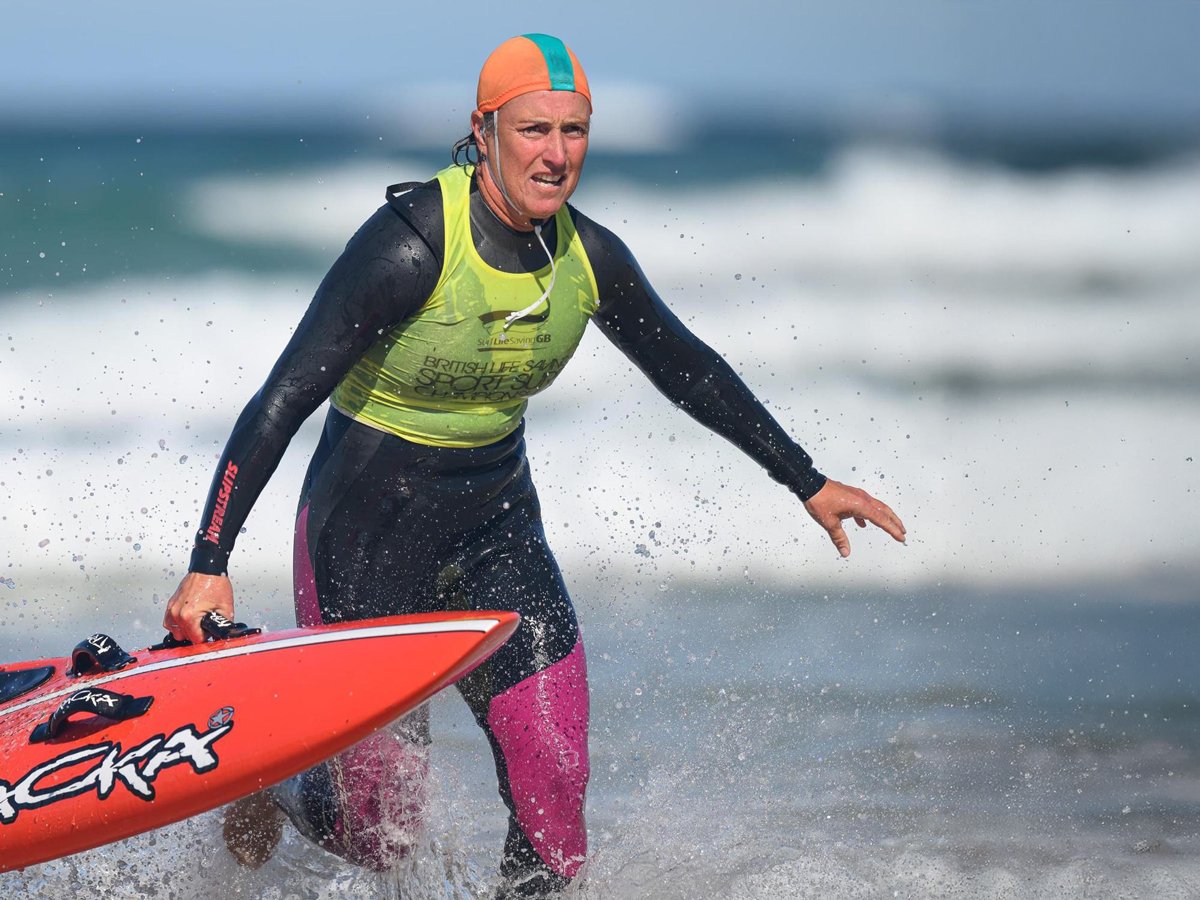
From there I set my sights on becoming one of the top competitors in the world. It had taken me years to see a real change in my form and at times I was so frustrated. Apart from overcoming Cancer, this was my biggest challenge yet. I knew it would be hard against the Aussies and Californians to name just a few, but I was determined to give it a go.
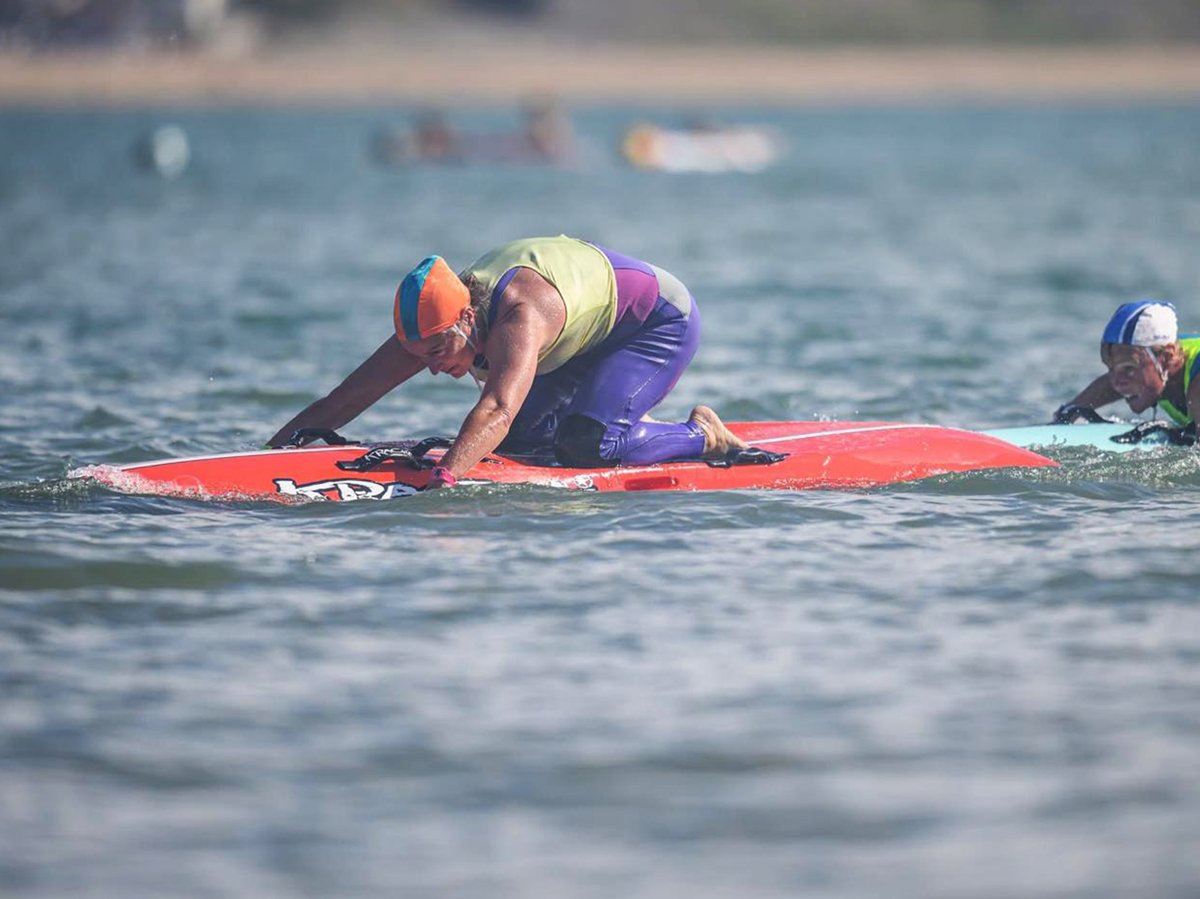
On my return to Cornwall, after having a well-deserved break, I started to focus on my ski paddle training. With some serious coaching from my crazy Australian trainer, Scott Wood, former GB coach, I started to work hard at my technique.
The World Championships in Italy had been postponed due to Covid but when it finally went ahead I was amped and ready to go. I opened with a Silver in the Ski race and a Bronze in the Ocean Woman. Along with my incredible teammates we went on to win Gold in the Board Rescue and the Ski Relay.
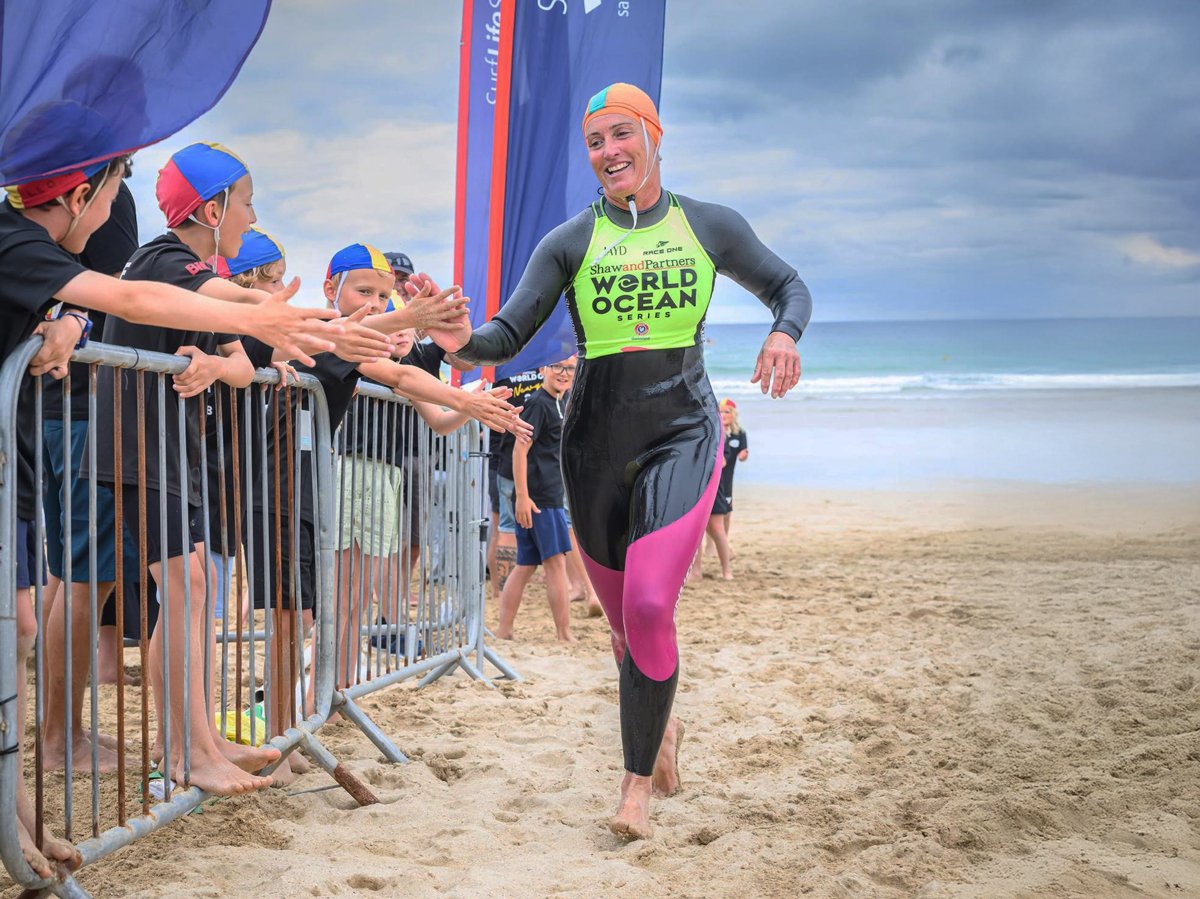
I felt so proud to say that I was now a World Champion for my age group with my partner and relay team and silver medallist for several individual events, a real haul of medals at my first World Champs. Buzzing was probably an understatement but returning to normality it had all felt a bit like a mad dream.
Back to Training
In all honesty training to achieve these results broke me at times and my body ached a lot. It was super hard. It has only been in the past two years that I have come to believe that at this great age, less is more and crucially rest is vital.
So back to the matter in hand. How can we stay fit for the water sports we love and really get the most out of the limited time many of us have, juggling busy schedules and family life. The key is that the training works for you. If it’s unrealistic, too hard to maintain and doesn’t work with your lifestyle you won’t be able to keep it up.
Look at the tips from Jodie, our Barbados Resort Director, she makes it work for her which gets her the results that she needs.
Your Training Plan
Below is what has helped me keep paddling strong and riding with confidence.
1. Strength Training: The Foundation of a longer and healthier life
As we age, our strength decreases – muscle mass as well as bone density is lost. Strength is fundamental to remaining powerful, and injury-resistant in the water. You don’t need to lift heavy to see benefits, functional movements using bodyweights or free weights like kettlebells or dumbbells will not only help you perform daily tasks more easily but help you feel stronger in the water, contributing to the following areas.
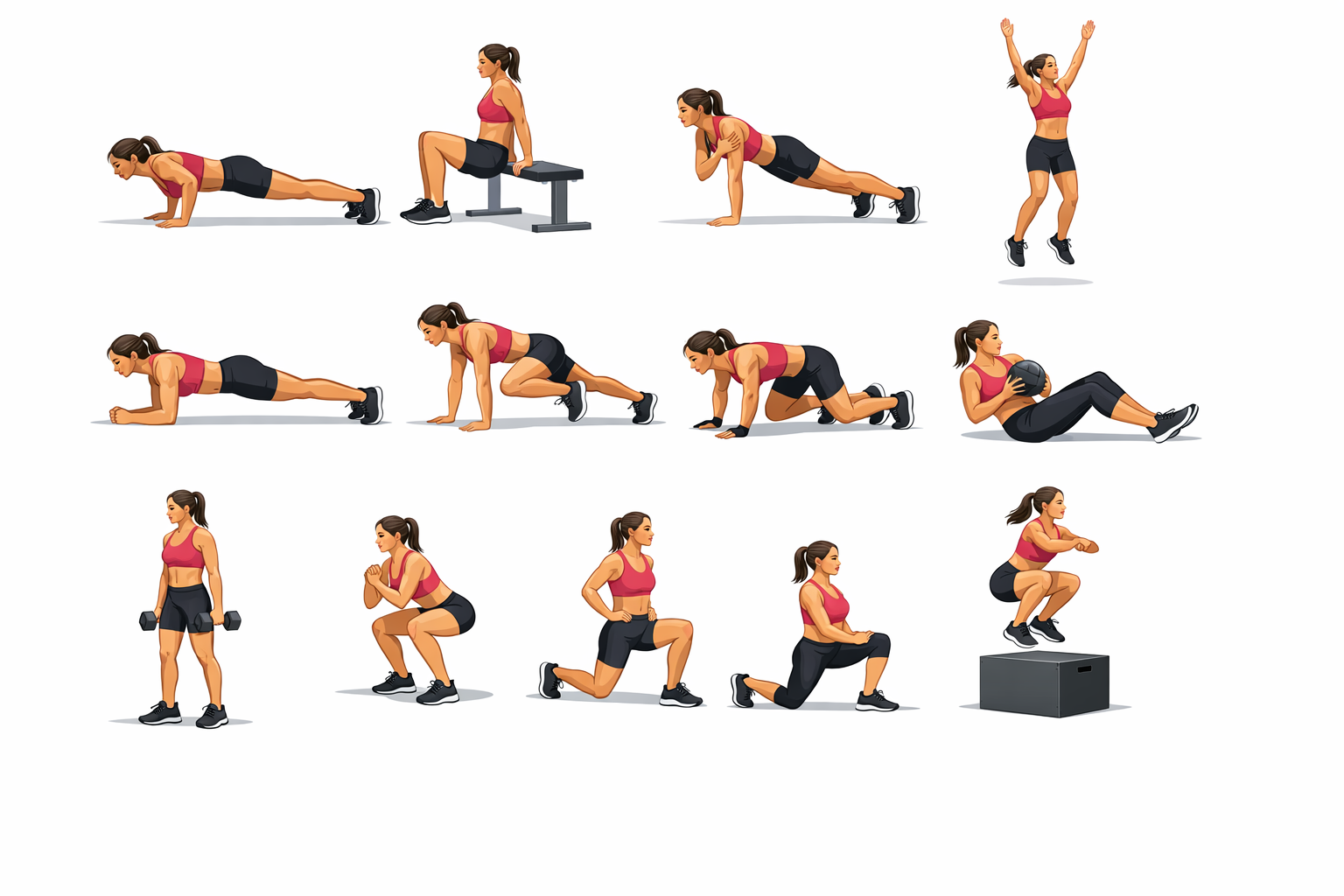
Functional Movements such as Push ups, Tricep Dips, Shoulder Taps and Burpees will all help strengthen the back, shoulders, chest and triceps. This will help with Paddle Power, Duck Dives and Pop-Ups
Planks, Mountain Climbers, Bear Crawls, Rotational Twists and Farmers Carries will aid Core Stability which is essential for all forms of surfing. This will help with turning, pushing through bigger waves, balance and landing manoeuvres.
Squats, Lunges and Box Jumps will boost Lower-Body Strength will help with pop-ups for surfing and bottom turns. Then for bodyboarding it will help with leg kicking with swim fins, explosive take-offs and Manoeuvres.
Aim for 2–3 sessions per week, even if only 20–30 minutes long. Consistency is the key to success. Mix up these exercises to ensure that all aspects of your body are worked on. Be realistic to make this happen, I repeat again, it must fit in with your lifestyle, or you won’t stick at it.
2. Mobility & Flexibility: Your Secret Weapon
Nothing reminds you of being over 40 quite like stiff shoulders, tight hamstrings or tight hips before a session! Mobility work will also reduce your chance of injury and increase your pop-up speed.
The key areas to prioritise are thoracic spine rotation, hip flexor mobility, shoulder and rotator cuff mobility – which will really help with paddling a surfboard. Make sure to remember your Hamstring, calf and ankle flexibility, which is especially helpful for bodyboarders using fins to avoid cramp and surfers wanting to develop a smooth pop up.
Just 10 minutes a day makes a noticeable difference. We need to keep our joints well ‘oiled’ as we grow older!
3. Cardiovascular Fitness: Paddle Longer, Ride More Waves
Surfing and bodyboarding demand both explosive bursts and sustained paddling endurance. Mix up your cardio with:
Swimming, which uses muscles like those that are required to paddle a surfboard efficiently in the ocean. Using a pull buoy will isolate and strengthen the upper body, building endurance for paddling your surfboard. Or paddle with just your arms and no legs to build your upper body strength. Taking time at the pool to build in leg kick practice will give your kicking power a boost when getting out through the surf on a bodyboard.
Interval training, alternating between higher intensity exercise and lower intensity recovery is helpful for duck-diving, paddling hard through sets and then catching waves.
Low-impact endurance work like brisk walking, jogging or cycling are fun ways to keep your heart healthy and general fitness. If you can comfortably paddle or kick for long stretches, everything else becomes easier.
4. Ocean-Specific Skills: Confidence Comes from Practice
The older I have got, the more I realise that ocean confidence isn’t just physical—it’s mental. Bring in practices such as reading the conditions before paddling out – make time to sit and watch, locate the best place to paddle out so that you can conserve your energy. Look at where you want to surf and watch how the waves are breaking. These moments before paddling out will help to centre your thoughts, bring you calm and give you chance to reflect on what you would like to achieve from a surf or bodyboard session.
Meditation and breathing techniques will help you to return to calm if you find yourself in a tricky situation. I use meditation for sleep, you can find some great sessions on YouTube which has helped me to learn how to breathe and relax.
Watch our video on breathwork and give it a try for yourself.
Learning lifesaving skills will help with everything from wave-impact management, how to relax and feel safe, floating, treading water and body surfing should you lose your board. Many Surf Lifesaving clubs around the country have strong master’s sections and often offer training sessions at both beginner and more advanced levels. This will really build your confidence for surfing and bodyboarding while also offering great all round fitness.
5. Recovery Matters More Than Ever
When we were teenagers, we could surf for hours, grab a snack, and head straight back in until it was too cold or dark! Now? Recovery is half the game. Recovery isn’t slowing down—it’s allowing your body to rebuild and strengthen muscles, it’s when gains are made, enabling us to perform at our best. For me this is where I have become wiser and learnt that overloading my body too much doesn’t always mean better fitness.
You should include proper hydration, post-surf stretching, sufficient, good quality sleep and occasional sports massage or self-massage using a massage gun.
6. Mindset: Staying Stoke-Driven, Not Age-Limited
One of the biggest myths is that the surf journey peaks young. But many women hit their stride later in life—more confident, more connected, and more in tune with their bodies. As we have seen with this year’s World Surf League tour, there is the return of Carissa Moore after her baby, the return of Steph Gilmore even after winning 7 world titles and being mid-way through her thirties.
Stay playful, inquisitive, and be gentle with yourself. Progress is progress, whether it’s paddling out a bit easier than last year or feeling stronger in bigger surf. Every wave is a win.
We don’t have to reminisce about what we used to be able to do, armed with this knowledge we can preserve our history with the ocean and keep ourselves strong enough to continue writing new chapters in it. Time in the ocean is always valuable and never a misuse of your energy. Do your best to maximise your water time as you are always learning about the ocean, regardless of the activity that you are participating in.
At 53 I still feel as though I’m improving. I’m still focussed on my training, and I don’t plan to slow down. I have built my life around ocean sports and I know how good it makes me feel to spend time in the ocean, so while ever I can do this, I will. If there’s anything that I can help you to do in order to stay surf fit beyond your 40’s, please reach out via Women and Waves. I look forward to seeing you in the water soon.
Here’s to more waves, more travel, more laughter in the lineup, and more days soaking in the stoke.
—-
Push Ups
Push ups build strength through the chest, shoulders, triceps and upper back by supporting your bodyweight in a plank and pressing it away from the floor. They help improve paddling endurance, pop-up power and overall upper-body stability.
Tricep Dips
Tricep dips target the triceps, shoulders, chest and upper back by lowering and lifting your body using your arms behind you on a bench or step. They develop upper-body pushing strength that supports paddle power and pop-up mechanics.
Shoulder Taps
Shoulder taps strengthen the shoulders, chest, triceps and deep core muscles by holding a stable high plank while lifting one hand to tap the opposite shoulder. This builds shoulder stability and upper-body control needed for paddling and balancing on the board.
Burpees
Burpees work the entire upper body — chest, shoulders, triceps and back — through the combination of a plank, push-up and dynamic jump. They build explosive power, endurance and strength that translate directly into stronger paddle strokes and faster, more efficient pop-ups.
Planks
Planks build deep core strength by holding the body in a straight line from head to heels. They train the abdominals, lower back and stabilising muscles, improving balance, board control and the ability to stay strong through turns and bigger waves.
Mountain Climbers
Mountain climbers strengthen the core by driving the knees toward the chest from a high plank position while keeping the upper body stable. This dynamic movement builds endurance, rotational control and the ability to stay centred during paddling and manoeuvres.
Bear Crawls
Bear crawls train core stability by moving forward in a low, controlled crawl position with hands and feet on the ground. They engage the abdominals, lower back and shoulders, improving full-body coordination and stability essential for balance and quick adjustments on the board
Rotational Twists
Rotational twists target the obliques and deep core muscles by rotating the torso side to side with control. This builds rotational strength and stability, helping with turning, carving and maintaining balance during rapid changes in direction.
Farmer’s Carries
Farmer’s carries strengthen the core by walking while holding weights at your sides, forcing the body to resist tipping or rotating. This develops strong, stable posture and balance, supporting solid landings and steady positioning on the board.
Squats
Squats build strength in the quads, hamstrings, glutes and core by lowering the hips back and down as if sitting in a chair, then pressing through the heels to stand. They improve lower-body power, stability and control for stronger turns, paddling, and pop-ups.
Lunges
Lunges target the quads, glutes, hamstrings and core by stepping forward and lowering the back knee toward the floor before pushing back to standing. They develop single-leg strength, balance and coordination, helping with board stability and explosive movements.
Box Jumps
Box jumps strengthen the quads, glutes, hamstrings and calves through a dynamic jump onto a sturdy platform, landing softly with knees bent. They build explosive power, agility and lower-body endurance, supporting quick pop-ups and strong, controlled movements on the board.