Photo: Duncan McLachlan
UK Surf Contest Cancelled After Female Competitors Abused
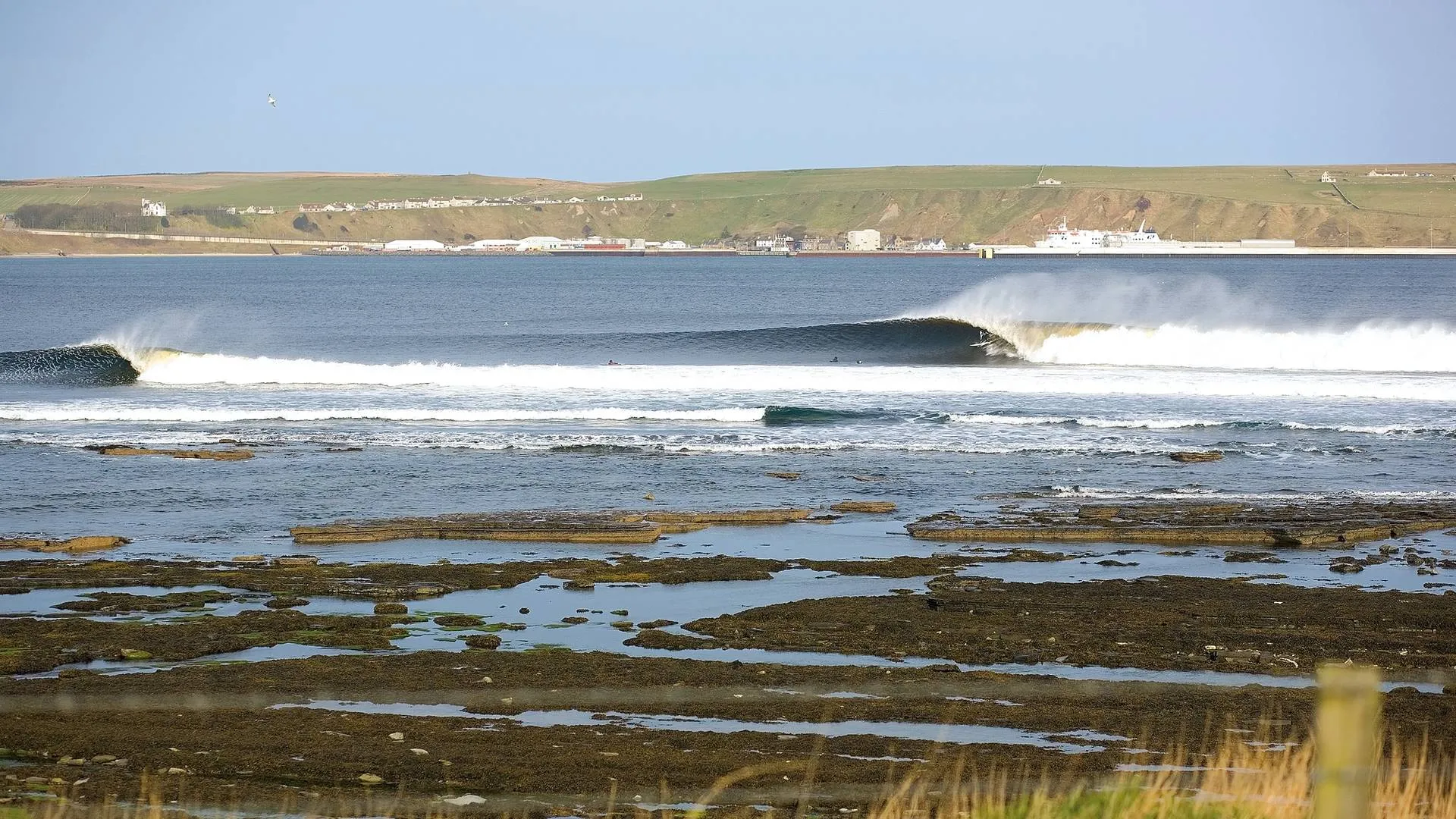
The final day of the Great Britain Surfing Cup at Thurso should have been a celebration. After two days of battling unpredictable conditions, the ocean finally turned on: clean, four-to-five-foot barrels reeling across the reef under a crisp Scottish sky. It should have been a day of triumph for the UK’s best surfers. Instead, it ended in controversy, police involvement, and difficult conversations about localism, misogyny, and the safety of women in our sport.
What Happened in the Water
During the women’s semifinals, five men, reportedly all in their 40s, paddled out into the competition zone. This wasn’t a misunderstanding. Word had already been spreading through the event site that tensions were brewing among a few members of the local surf community.
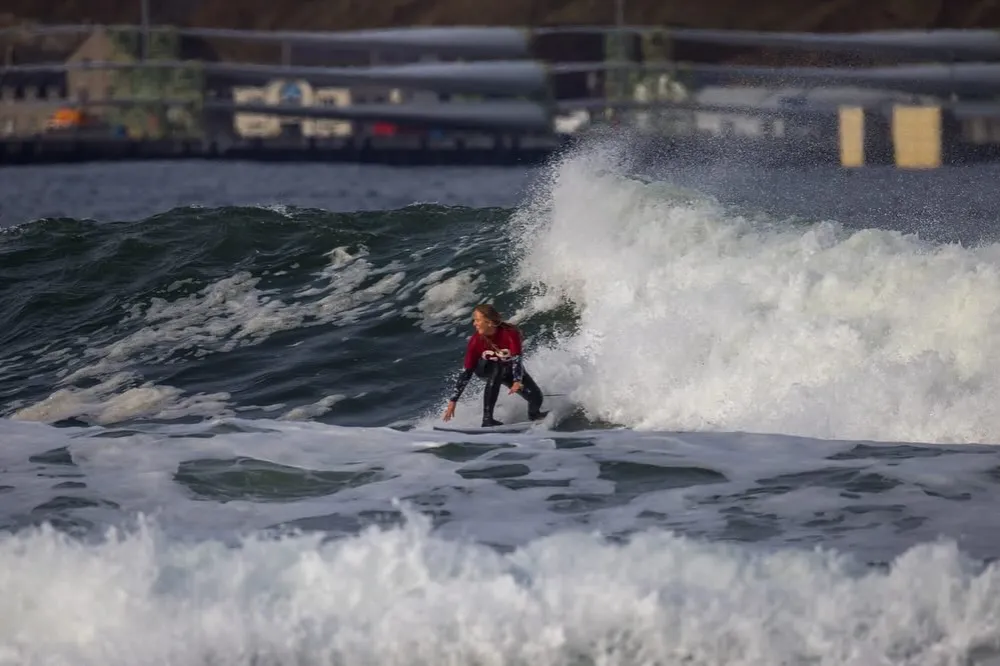
The disruption escalated quickly. Female competitors, some as young as 15, were shouted at, dropped in on, and told to leave the water. Multiple eyewitnesses reported the men aggressively interfering with heats and verbally abusing athletes mid-competition.
The situation became truly dangerous when a 15-year-old surfer was reportedly run over during a collision, leaving her shaken and struggling to resurface. With safety now a serious concern, organisers made the difficult decision to cancel both the men’s and women’s finals.
Rachel reports on our YouTube channel about the incident.
The Aftermath
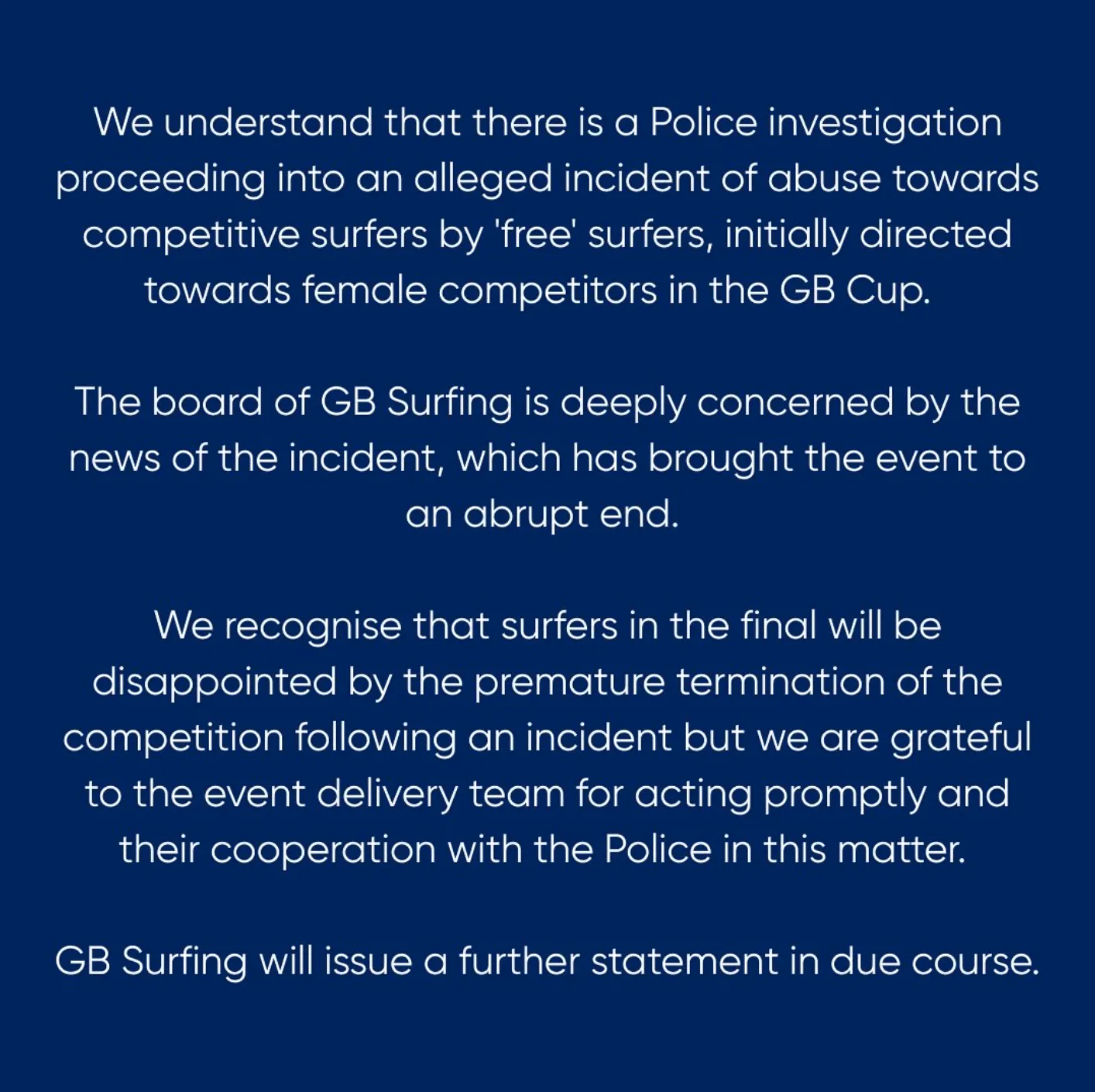
GB Surfing issued an immediate statement confirming a police investigation was under way, stating that “competitor safety remains our number one priority.”
Police Scotland later confirmed that enquiries are ongoing. The potential consequences for those involved could include prosecution and Anti-Social Behaviour Orders preventing them from returning to the site.
The cancellation hit hard. Many athletes had travelled the length of the country and spent months preparing for this moment. Male semifinalist Lukas Skinner expressed his frustration publicly on social media, naming one of the individuals involved.
Ian Battrick’s Response
Jersey-born surfer Ian Battrick has since become a focal point in the story. Known for his decades of van-life solitude and remote surf exploration, Battrick has now shared a detailed statement offering his perspective.
“Surfing has been my whole life, not just a sport or a job, but something that’s shaped who I am. The ocean has always been my place of peace, my community, and my compass. I’ve spent years working within the surf world, building a life around tides, wind, and the quiet joy of being in the water. I’m an introvert at heart, happiest when things are calm, when I can quietly do what I love.”
He went on to acknowledge that paddling out during the event was a mistake:
“During the recent surf competition, I made a mistake. The event was still running, and I chose to paddle out when told we could, maybe I shouldn’t have. It was selfish and thoughtless. I didn’t think about how that might affect the competitors or those who had worked hard to make the event happen. I take full responsibility for that choice. It was wrong, and I’m deeply sorry to anyone who felt disrespected or upset because of it. I can’t take it back, but I want to make clear that it came from poor judgment, not bad intention.”
He also referenced an agreement made before the event:
“As it had been agreed several days in advance with the North Shore Surf Club we could free surf after 3pm. Even though the commentator was also clearly explaining free surfing here at the time. And such things also happen at surf breaks during competitions worldwide.”
Battrick expressed distress over what unfolded afterwards:
“What’s happened since has been heartbreaking. In the days after, rumours began spreading online, stories that I had assaulted people or verbally abused others in the water. None of this is true. There were live streams running and people all around, yet these stories kept growing, changing shape with every post. Watching your name and your character twisted into something you don’t recognise is a kind of pain that’s hard to describe.
I can accept being called out for any mistake I have personally made. I deserve that. But what’s followed, the hate, the name-calling, the lies, has gone far beyond accountability. I’ve had hundreds of messages and comments from people I’ve never met, many of them cruel and deeply personal. People have felt afraid to speak the truth because their words are deleted or shouted down. It’s been overwhelming.”
He continued by outlining the steps he’s taken to address the fallout:
“I was physically shoved and threatened with a fist raised by someone from Jersey. The Police were present and observed all these events as they unfolded. I have provided a statement and am cooperating fully with them.
This situation affects not only my personal reputation, but also a business I am involved in. I have documented and preserved all screenshots and videos of the abuse across all channels, messages, articles and defamatory posts I have received, and I have passed these to the appropriate authorities and my lawyer.”
Battrick said he recognises the perception some hold of him, but rejects what he describes as a wave of “hate and misinformation”:
“I am fully aware of the perception most people have of me. I have heard many stories in the past that are untrue, and I can just laugh and shrug it off. But this I cannot. For something that I haven’t done, and with no evidence of, I find it alarming the amount of hate that has gone viral online , much of it from my home island. Sadly, anyone writing positively for me has their posts deleted or attacked hatefully.”
He added that he has long supported competitive surfing in Scotland:
“I am most certainly not against competitions, because I sponsor them. Over the last decade I have sponsored Scottish surfing events, the Scottish Surfing Federation, along with many men, women, children and also the North Shore Surf Club.
I am committed to resolving this constructively and respectfully. I ask the community to refrain from harassment and allow the proper processes to run their course. I respect the athletes, especially the younger competitors, and I regret any upset caused.”
Community Response
The wider surf community has been quick to respond, voicing both outrage and heartbreak at what happened. Across social media, thousands have shared messages of support for the competitors and calls for accountability from event organisers.
@tonitaish: “I’m surprised that this was not handled in real time. Where were the officials? Why were these guys left to harass the women competitors? If the officials were intimidated, why were police not called? The comp has a permit. This is ridiculous. The lack of action from the beach makes it appear that this disruption was tolerated.”
@andibobandi86: “Heartbreaking to see the event rescheduled because of harassment and intimidation. The women who trained and showed up for this deserve better. No one should have their opportunity taken away by abuse. I definitely stand with them, and with every woman who refuses to be pushed out of the water.”
@laurasidestreet: “Are you telling me they only did this during the women’s heats and not the men’s? That’s a disgusting level of misogyny right there and extremely disrespectful towards these ladies who train so hard.”
@amyyogamentor: “I think these are three teenage girls, children, and these men have completely lost their way if they think this is ok. Picking the women’s comp for one reason only. It’s very sad to see on so many levels.”
@jocoumbe: “Make sport safe and free from abuse. Work extra hard to make women’s sport safe and free from abuse. Protest all you like, but this is real cowardice from the free surfers who chose not to take their grudge up with the organisers, but with young, female surfers. Sisters. Daughters. I hope they are ok.”
Yet amid the criticism, others have spoken up in defence of Ian Battrick and the Thurso locals, urging balance and perspective.
@chrisburkard: “Sorry Ian, people really can suck sometimes.”
@steinarrlar: “Lots of love from the surf fam up north Ian. You are one of us and always will be! Nobody died and nothing really serious happened. As we say in the Arctic: this is a big storm in a small glass.”
@soundwavesurfboards: “Batty by name, batty by nature, a poor decision but that’s what makes us human. You’ve reflected on your judgement and taken accountability for it. As somebody who was there and saw first-hand the amount of waves that were coming through on this swell, I feel the event could have easily been completed. Unfortunately you’ve been the soft target because of your visibility, and although in the wrong, the abuse and trolling must now cease.”
@philgoodrichart: “Ian Battrick is sincere, kind, generous and one of the best barrel riders I’ve come across in real life. Online opinions fade quickly. Real friends last for ages.”
These contrasting viewpoints highlight just how emotionally charged and complex the situation has become, a moment that has forced the surf world to reckon with both accountability and empathy.
The Bigger Questions
This incident forces us to confront some uncomfortable truths within surfing culture.
Was this misogyny?
The disruption took place during the women’s heats, not the men’s. That detail alone raises valid questions about gender bias and intimidation. Sadly, female surfers across the world are all too familiar with hostility in the lineup, from dismissive attitudes to outright aggression.
What about localism?
Localism is complex. It’s rooted in pride, belonging and the protection of fragile surf spots, but it crosses a line when it turns hostile or violent. The GB Cup rotates between the home nations, visiting Thurso only once every four years. Some of those involved in the protest weren’t even local to the area, which challenges the notion of who really has the right to claim ownership of a wave.
And where do we draw the line?
Surfing has always existed between freedom and structure, between the purity of the sport and the pressures of competition. But there is no justification for threatening behaviour, especially towards teenagers. Respect for others in the water is not optional, it’s foundational.
The Cost to British Surfing
The damage extends far beyond one cancelled final. For years, British surfers have been working to earn recognition on the world stage, developing pathways for athletes, securing funding, and proving that our surf community can be professional, inclusive and world-class.
This single event threatens to undo some of that progress, fuelling outdated stereotypes that UK surfing is fractured or insular.
Rescheduling the finals will take time, resources and emotional resilience from athletes, organisers, and volunteers. GB Surfing has confirmed that both finals will be held at a later date, though details are yet to be announced.
Moving Forward
Surfing’s deep sense of belonging, its tribal energy, is part of what makes it so special. But when that sense of belonging turns into exclusion or aggression, we all lose.
There is space for both community pride and inclusivity. There is space for locals and visitors, competitors and free surfers, men and women. There is no space for intimidation, misogyny, or violence in any form.
At Women + Waves, we believe the ocean should be a place of equality, joy, and empowerment. Every surfer deserves to feel safe and respected in the lineup, whether they’re competing or catching their first wave.
As Rachel said in our recent YouTube video response to the incident, “This isn’t just about Thurso, it’s about how we move forward as a community. We can’t stay silent when young women are made to feel unsafe doing the sport they love. Change starts with all of us.”
The ocean will always heal and reset, but it’s up to us to do the same. Let’s make sure that the next generation of surfers inherit a lineup defined not by hostility, but by respect.
Editor’s Note: Women + Waves has included Ian Battrick’s statement and a selection of community responses to reflect the broad range of opinion surrounding this incident. We do not condone harassment or abuse of any kind, and we continue to advocate for respectful, inclusive surfing spaces for everyone.