Menopause gets talked about like something you white-knuckle your way through. Survive it, manage it, wait for it to be over. But talk to enough women who’ve actually been through it, and a different story starts to show up too: it’s often the point where they finally do something just for themselves. New hobbies, new challenges, new versions of who they thought they were.
For a growing number of women, that new thing is surfing.
Something that I’ve noticed which happens on pretty much every trip we run. Dinner’s in full swing, wine’s flowing, and then I’ll spot a little huddle of women in the corner, heads together, voices dropped like they’re planning a heist. During our Cornwall Camp, I finally gave in and eavesdropped. Turns out the big secret was… menopause. Whispered, like it was something to be embarrassed about rather than something roughly half the population goes through.
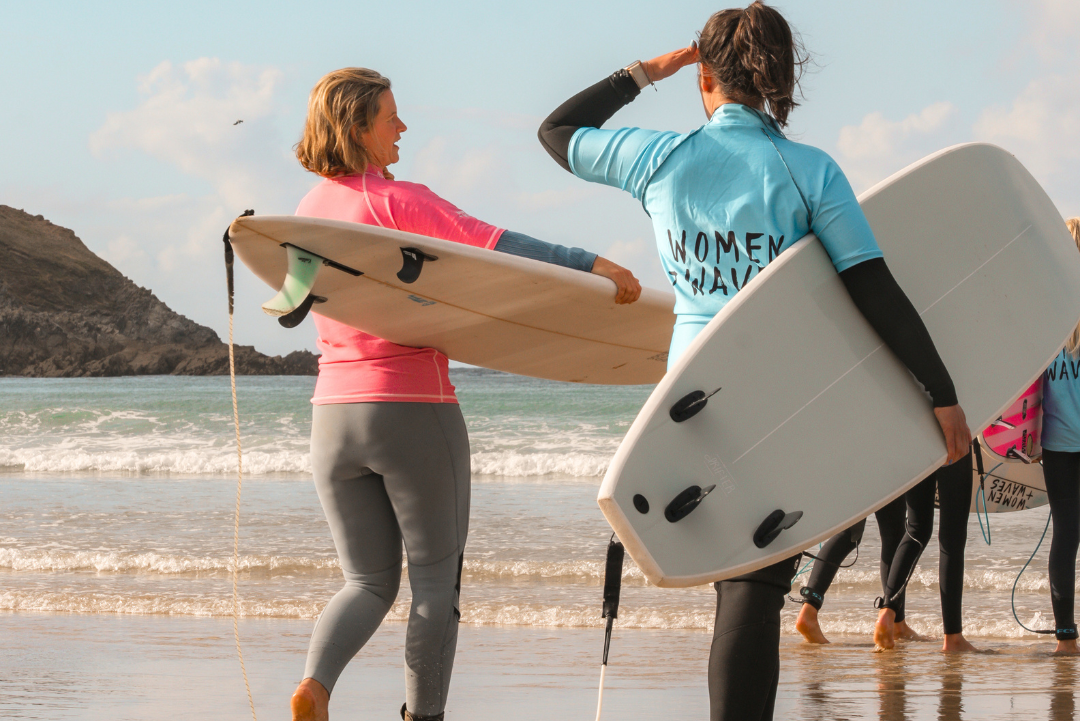
And it’s not a one off. Nearly half of our guests are over 40, so if you’ve been picturing a surf camp as a young person’s thing, it’s time to update the mental image. Guest after guest tells me how relieved they feel just meeting another woman going through it on our trips, like they’ve stumbled into a club nobody talks about out loud. The other thing they all say? Surfing and the sea genuinely help, more than you’d expect.
Full disclosure, I’m not there myself yet. But between watching it play out on nearly every trip we run, and knowing full well it’s coming for me eventually too, I’ve got a pretty vested interest in getting this normalised well before it’s my turn.
What’s actually going on in your body
We’re not doctors, so this isn’t medical advice, just useful context. Menopause, and the perimenopause that leads up to it, bring hormonal shifts that can affect sleep, mood, bone density, and how your body handles stress (Women’s Health Concern – Menopause Wellness Hub). It’s a genuine physical transition, not just a mood or a phase. And that’s exactly why movement, especially outdoors, in cold water, in a body of water that doesn’t care what decade you’re in, matters more here, not less.
Why surfing specifically works so well right now
Physical
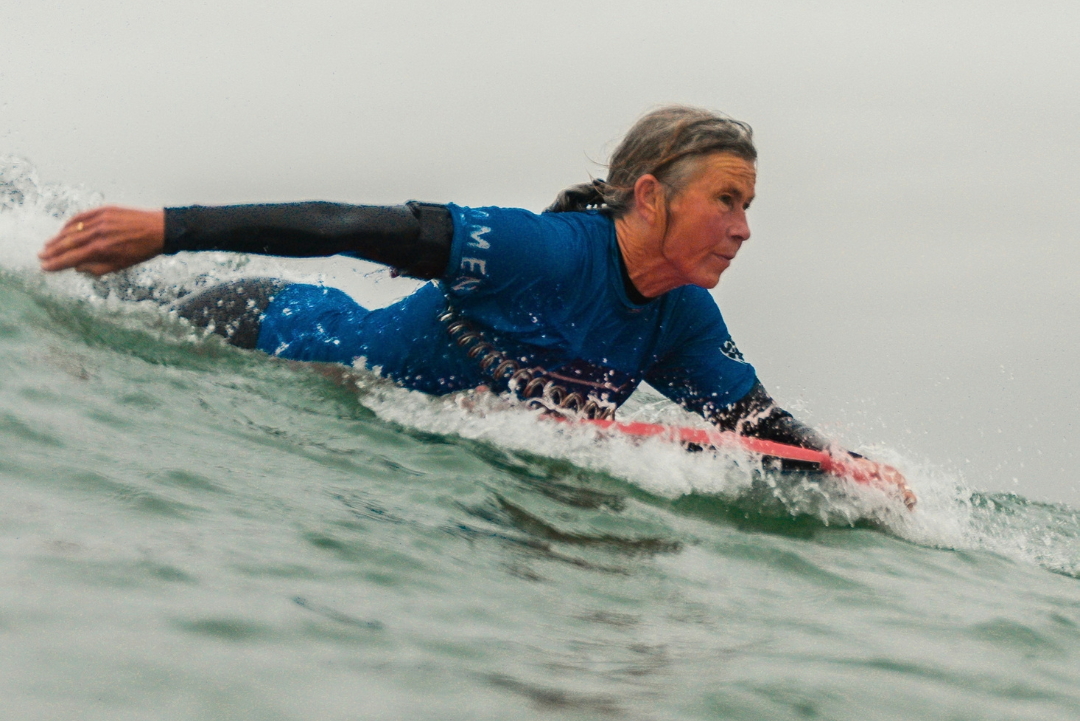
Weight-bearing exercise, exactly what surfing gives you through paddling, popping up and balancing, is one of the clearest ways to help protect bone density as oestrogen drops after menopause (NHS). Paddling and popping up build full-body strength without you ever setting foot in a gym, and the balance and core work you get from just staying on a board pays off in every other part of your life too, whether you’re surfing during a weekend in Newquay or a fortnight retreat in Bali.
Want a head start? Our Surf Mobility & Flexibility Routine For Surfers tutorial is a good place to begin.
Mental
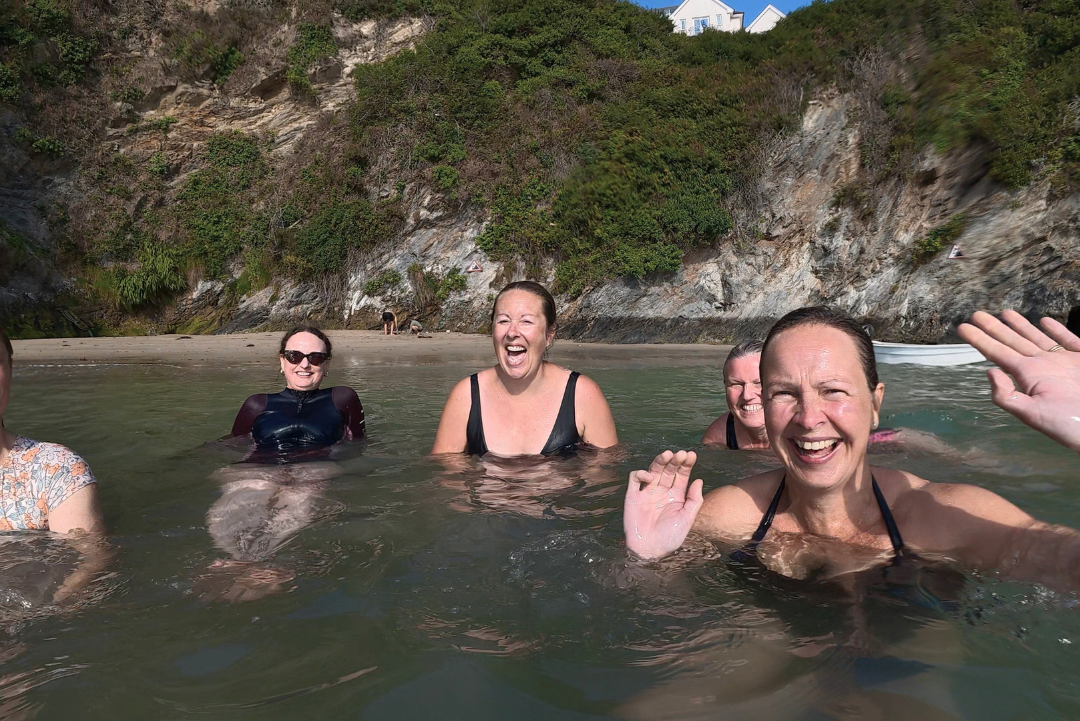
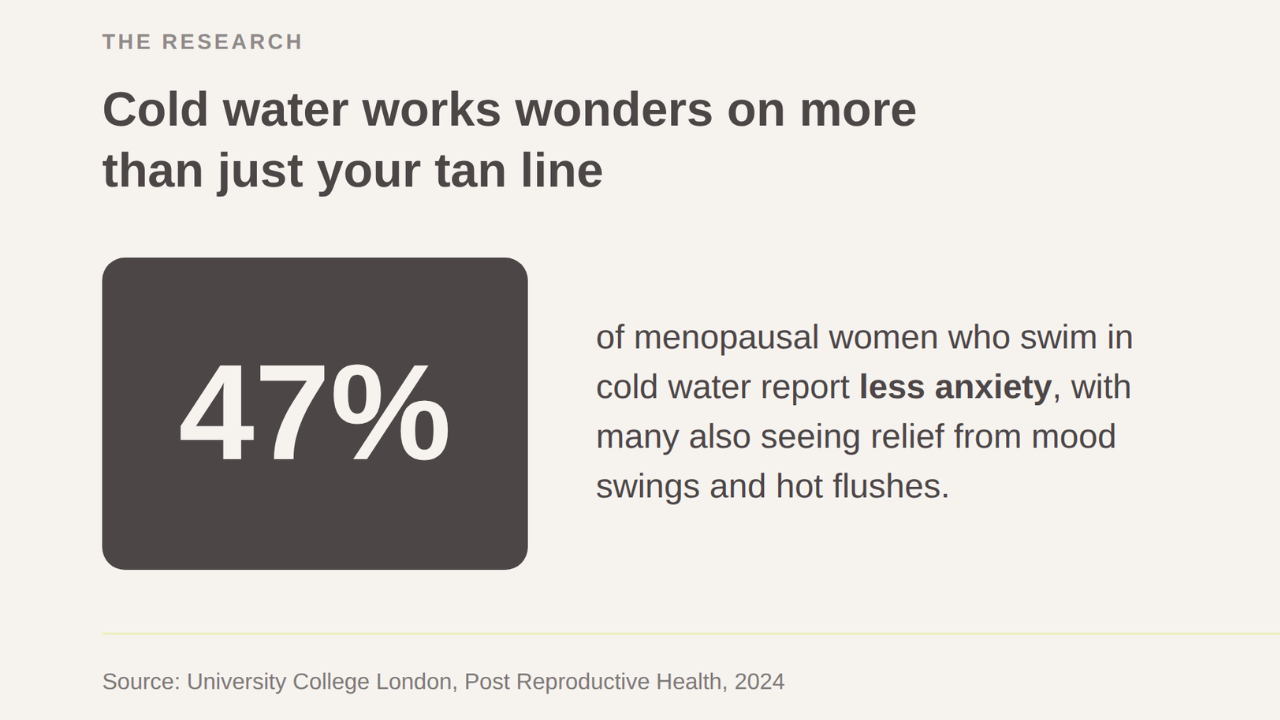
This is where the water really earns its keep. A 2024 UCL study of over 1,100 women found cold water swimming eased anxiety in 46.9% of menopausal participants, mood swings in 34.5%, and low mood in 31.1%, with 63.3% saying they took to the water specifically to manage their symptoms (UCL). One participant put it simply: “In the water, I can do anything. All symptoms disappear, and I feel like I am at my best.” Surfing gives you that same cold water hit, plus a task that demands total focus, so there’s genuinely no room left for anything else. For an hour, your brain just has one job: catch the wave.
Sleep
The research here is more nuanced than the headlines suggest. A 2023 review of 17 trials and over 2,400 women found exercise didn’t shift overall sleep quality by much, but it did meaningfully ease insomnia and sleep problems, especially for women who already struggled to sleep (Frontiers in Medicine). So if sleep’s gone from “occasionally tricky” to “actively hostile”, it’s worth a try, just don’t expect it to fix everything on its own.
Confidence and identity
Learning something new in a body that might feel unfamiliar right now can be properly empowering. Instead of resenting the changes, you get to find out what this version of your body can actually do. Lisa’s a good example of exactly that, read how she rebuilt her surf fitness over 40 and came out stronger for it.
Community
This one’s backed by research too. A study of surfers found they score 5.1 percentage points higher on “community connectedness” than the national average, the biggest wellbeing gap the researchers found in any category (npj Ocean Sustainability). Surfing alongside other women at the same stage of life takes away that low hum of comparing yourself to the 22-year-old effortlessly cross-stepping past you. Everyone in the lineup gets it, whether that’s a UK weekend or halfway across the world on retreat.
TAMARA’S STORY, 59, US
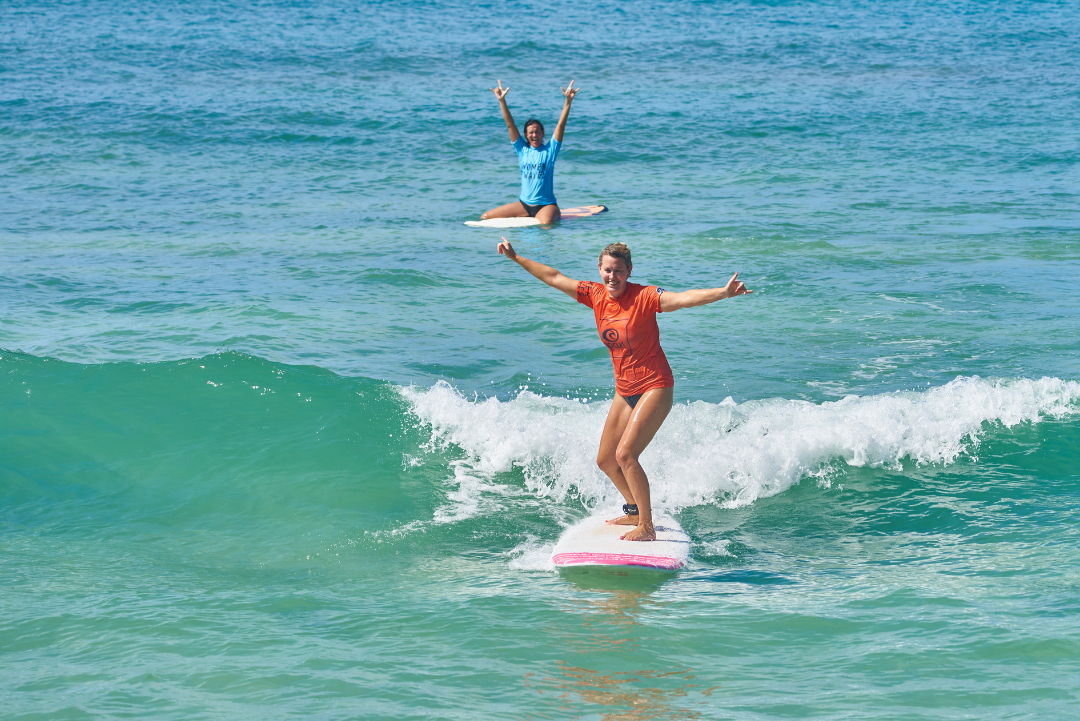
“I started surfing at 55. I was definitely humbled the first time, but I felt so supported by the team and the other women that I vowed to get stronger every trip.
I remember the moment in Bali when I rode the waves longer than most and realised I could hang with the younger women. I felt at peace with my older self.I might not be the strongest or the fittest, but I’m so much stronger than I would have been if I’d let my age stop me from signing up.And a bonus: no monthly ‘visitor’ means so much more freedom in the water!
“I might not be the strongest or the fittest, but I’m so much stronger than I would have been if I’d let my age stop me from signing up.”
I’m about to head off on my fifth trip with Women & Waves, and I’m more confident in everything in life. Take that leap and go! It’s the best gift you can give yourself, at any age.”
LILAH’S STORY, 51, LONDON
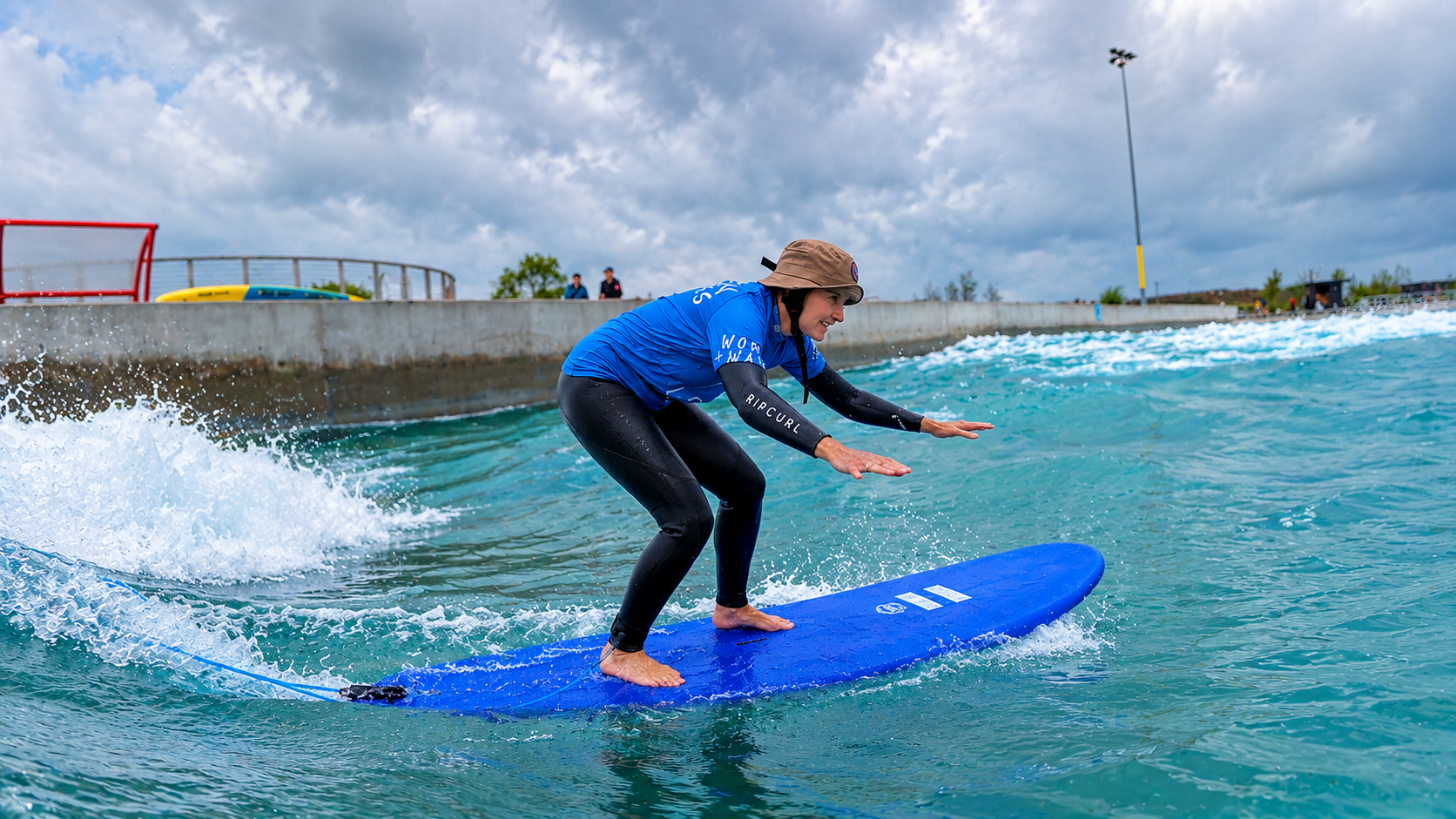
“I’ve wanted to surf ever since watching Point Break in my 20s (!!), but life never seemed to make room for it. A couple of years ago, having hit perimenopause and my 50s, I decided it was something I never wanted to look back on and regret.
My first surf camp was in Morocco. I was so nervous and full of insecurities about taking up an extreme sport at 51, and I’d grown up feeling that surfing was a boys-only arena. But learning with only women put me at ease. Women are so good at cheering each other on.
“It’s been a rollercoaster of highs and lows that I want to ride until I die.”
I’ve since surfed in Costa Rica and Cornwall, and it’s been a rollercoaster of highs and lows that I want to ride until I die. When I’m in the water, I feel more alive than anywhere else. I’m learning not to pressure myself to look like a pro, and to just have fun. We play so little as adults, and surfing takes me right back to that feeling of youthful abandon!”
Lilah’s a good example of where this can lead. She joined us for her first Cornwall Camp, came back for one of our events at The Wave, and is now booked onto our Barbados retreat later this year. That’s the pattern we see over and over: one weekend turns into the confidence to go further, and further usually means somewhere further still. Wherever you’re starting from, there’s a next step waiting for you too.
Q&A: Your Questions Answered
Will surfing actually help with my hot flushes (or hot flashes)?
Honestly, the research on exercise and hot flushes specifically is mixed; a Cochrane review found the evidence wasn’t strong enough to say exercise reliably cuts their frequency or severity. What the research does show is that cold water helps with the anxiety and mood swings that often ride alongside them, so even if it’s not a direct fix, plenty of women find it helps them cope with the whole package.
I’ve got joint pain or don’t feel as fit as I used to; is surfing realistic?
Yes, that’s exactly why it works well here. Surfing is weight-bearing but low-impact, so you get the bone and muscle benefits without the joint-jarring of running or high-impact classes. Our coaching is built for real bodies at every fitness level, not just the ones already used to being active.
Is it too late to start if I’ve never surfed before?
Genuinely, no. Over 40% of our guests are over 40, and 1 in 7 are over 50. Plenty of our students picked up a board for the first time well into their 50s and 60s; we wrote a whole post on it: Can I Learn to Surf at 40?
What if I get a hot flush or need a break mid-session?
Take it. Every coach works at your pace, and paddling in for a breather is a completely normal part of any session, menopausal or not. Nobody’s watching the clock but you.
Will I be the oldest one there?
Almost certainly not, and even if you are, it won’t feel like it. Guest after guest tells us the age gap disappears the second everyone’s in wetsuits.
Do I need to be a strong swimmer?
No, but you should be comfortable in the water. Our coaches assess ability before anyone paddles out, and beginner sessions stay close to shore with full supervision.
By the numbers
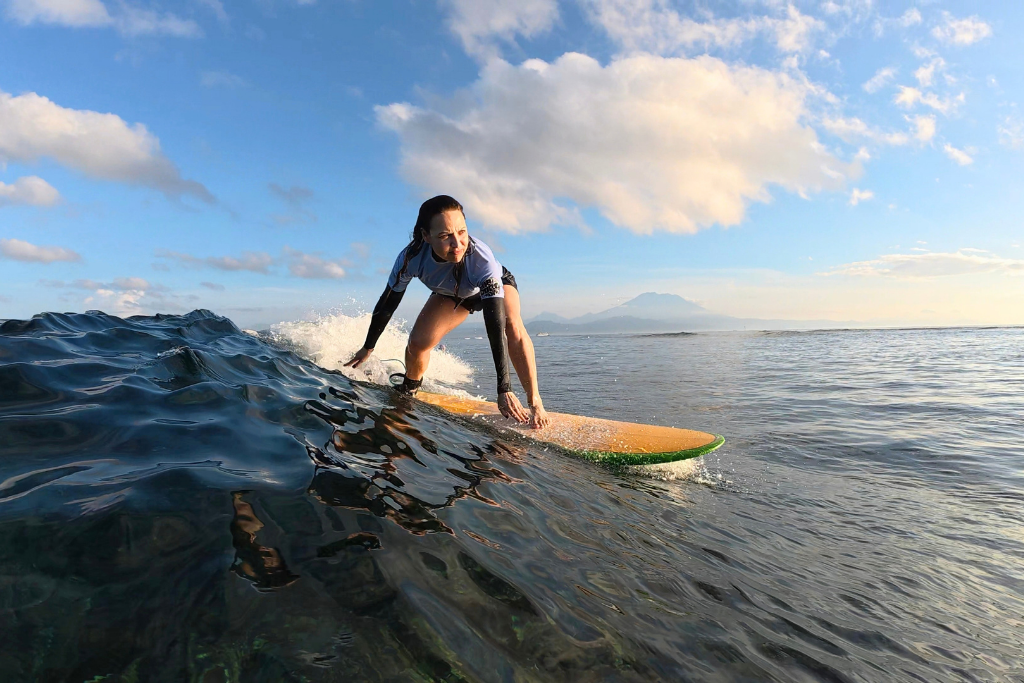
43% of our guests are over 40, because surfing doesn’t have an age limit. 1 in 7 are over 50, proving it’s never too late to start.
“Being in the sea has a way of calming the mind, body and soul. There is never more need for this than when your hormones, or lack thereof, are happily dancing to their own crazy rhythm. Surfing has reconnected me with my body, given me a feeling of strength in all its guises and brought with it so much fun in this wild ride of life”- Hatty , Head of Operations and Partnerships.
Ready to get in the water?
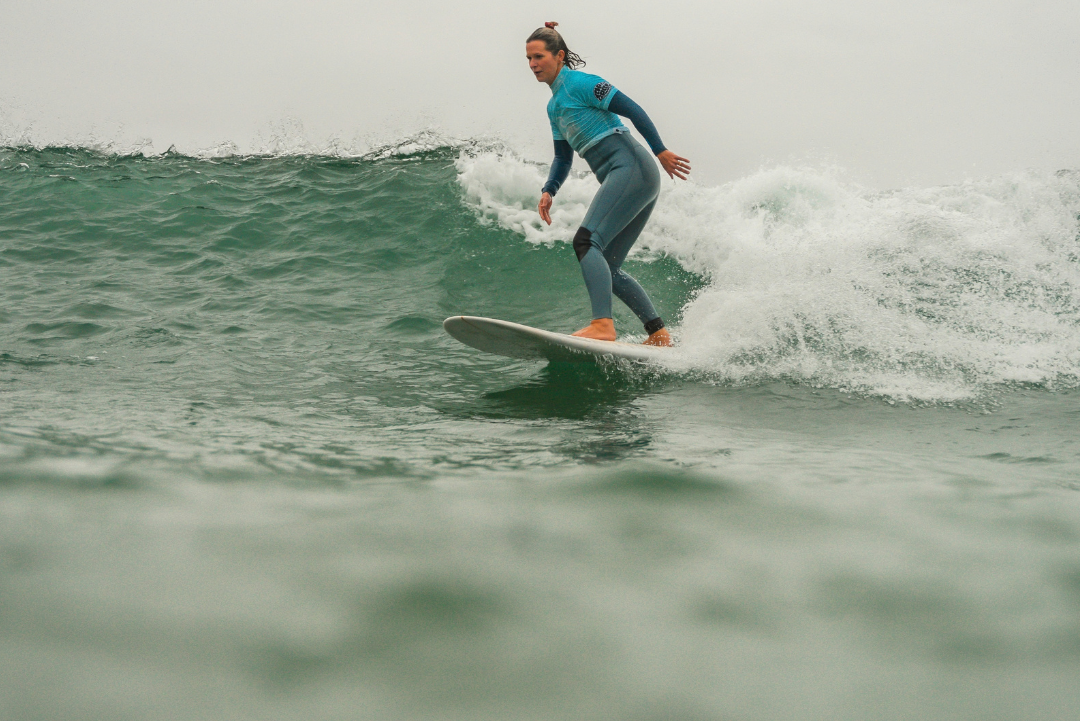
Come and join us on one of our UK coaching weekends in Newquay, Wales, Croyde or at The Wave in Bristol: small groups, proper coaching, and evenings that usually end with wine and exactly the kind of conversation that kicked off this post.
And if this has you thinking about going further, our international retreats to Portugal, Morocco, Barbados, Costa Rica, Nicaragua and Bali are built for exactly this: real progression, real rest, and a genuinely global community of women figuring this stage of life out together. Plenty of our retreat guests started with a UK weekend just like this one. If milestone trips are your thing, we’ve written about that too: Why More Women Are Celebrating Life’s Milestones With Solo Surf Trips.