Have you been daydreaming of crystal-clear water, palm-lined beaches and long rides on perfect tropical waves?
If you’re planning your first tropical surf trip as a woman, this is for you.
Planning a tropical surf trip should feel exciting — and honestly, with the right prep, it really is. But we know it can feel overwhelming too, especially the first time. Where do I even start? What do I actually need? Will the waves suit my level?
Whether you’re a beginner building your confidence in the water or an experienced surfer with a serious case of wanderlust, this guide has got you covered. We’re talking destinations, surf conditions, packing lists, travelling with boards, skin and hair care in the tropical heat — everything we wish we’d known before our first trip. Consider it your one stop shop!
How to Plan a Tropical Surf Trip as a Woman (Without Feeling Overwhelmed)
Planning a tropical surf trip as a woman doesn’t have to be stressful. With the right preparation, you can arrive at your destination feeling excited, confident and ready to surf — whatever your level.
Here’s everything you need to know.
Step 1: Research Your Destination and Surf Conditions
Before you book anything, do your homework on the destination. The right wave for your level makes all the difference between a trip that transforms your surfing and one that knocks your confidence. Popular destinations include Bali, Costa Rica, Nicaragua, Barbados and Sri Lanka.
These locations are ideal for progression, offering consistent waves, surf schools and supportive communities.
Getting there:
How far is the surf spot from the airport — and how easy is it to get there with boards?
Will you need a hire car or is everything within easy reach?
About the break:
Is it a beach break, reef break or point break — and how tide sensitive is it?
What size waves are typical and how consistent is the swell?
How crowded is the lineup and what level of surfers tend to be there?
What is the water temperature — will you need a wetsuit?
When is the best time of year to visit?
Once you’re happy the destination suits your level and goals, you can start looking at flights, visas and vaccinations.
Prefer to have everything organised for you? Our Women + Waves surf camps take care of all the logistics so you can focus entirely on your surfing 🤙
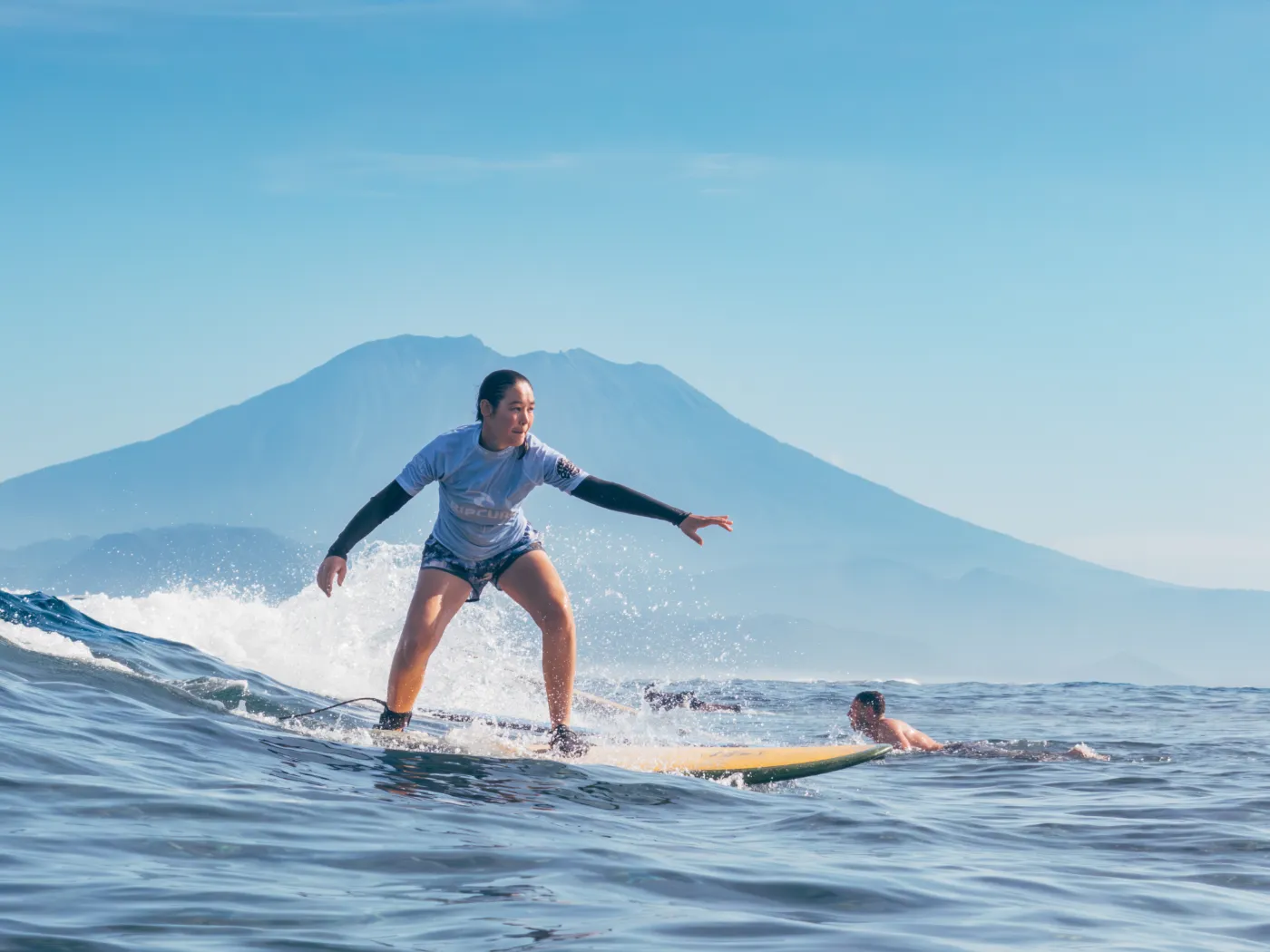
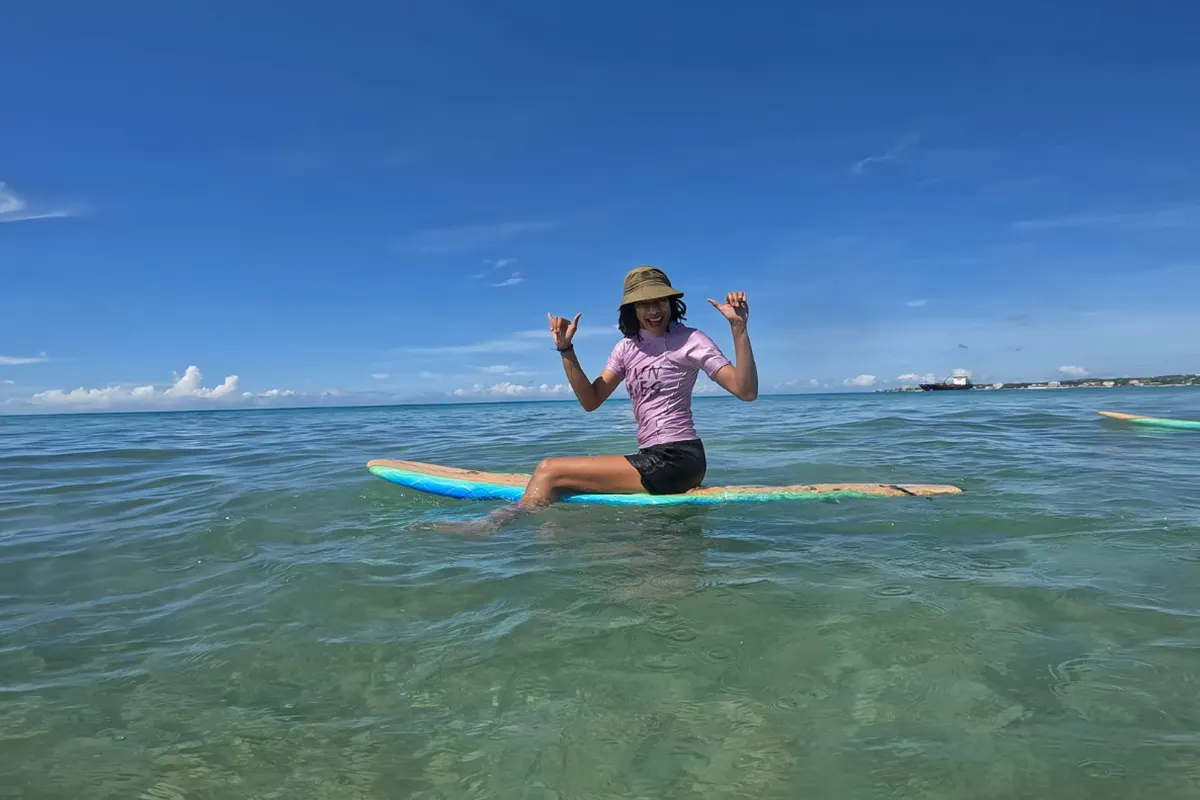
The only outfit you need on our Bali trip – Boardshorts and a rash vest, done!
Step 2: Sort Your Travel Admin Early
Getting the boring stuff out of the way early means you can focus on the exciting part — actually going.
Airline policies for surfboards
Surfboard fees and size limits vary hugely between airlines. Always check before you book your flights to avoid unexpected costs at check in. Our full guide on how to pack your board bag is worth a read too.
Visa requirements
Check the UK Foreign Travel Advice website and your destination’s embassy website well in advance — some visas take time to process.
Vaccinations
Visit your GP or a travel clinic at least 6-8 weeks before you travel. Common vaccinations for tropical surf destinations include Hepatitis A, Typhoid, a Tetanus booster and Malaria prevention where required.
Travel insurance
Don’t cut corners here. Make sure your policy specifically covers surfing or adventure sports — many standard policies don’t. Also check your passport is valid for at least six months beyond your travel dates.
Step 3: Get Your Money Sorted
A little money prep before you go can save you a serious headache — and a small mortgage in airport exchange fees
Research the local currency — know roughly what things cost so you’re not caught out
Notify your bank before you travel — nothing worse than your card getting blocked on day one
Get some local cash before you land — don’t rely on finding a cash machine straight away
Avoid airport currency exchange desks — the rates are almost always terrible. Use an ATM at your destination instead
Get a travel card — Wise or Revolut are brilliant for avoiding hefty foreign transaction fees
Always carry some cash — many surf destinations are still very much cash only, especially at local warungs and beach shacks
Know the rough taxi fare from the airport — so you’re not getting charged the tourist rate
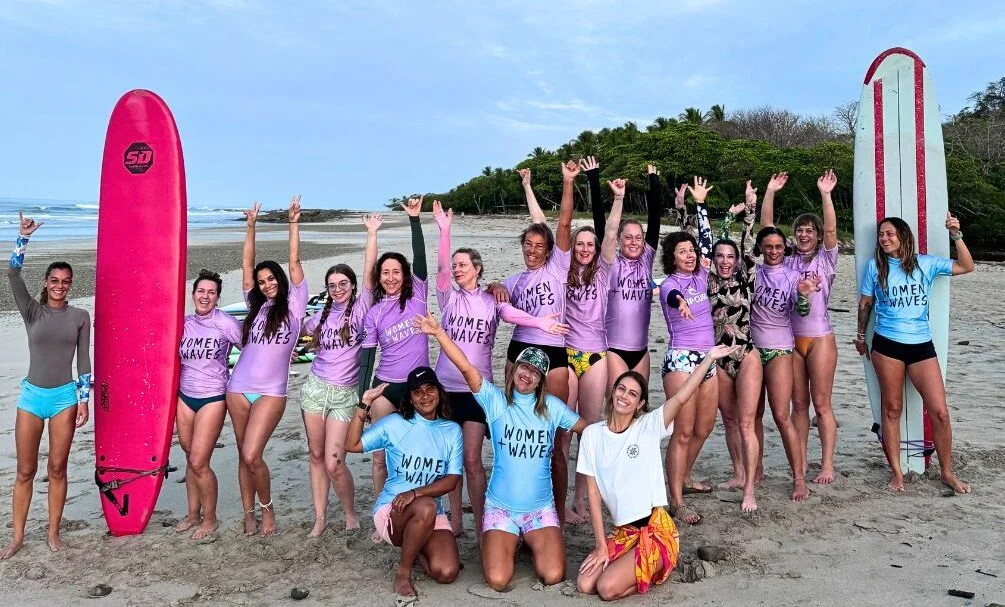
Our Womens Surf + Yoga Costa Rica Surf Trip
Step 4: Build Confidence Before You Even Land
One of the most underrated ways to prepare for a surf trip? Watching the waves before you arrive. Seriously — spending a few minutes each day on a surf forecast website in the weeks before your trip can make a huge difference to how confident you feel when you finally paddle out.
Watch where the waves break, where surfers paddle out and where they sit in the lineup. The more familiar it feels before you arrive, the less overwhelming it is when you’re actually standing on the beach.
Surf Forecasting Tools Worth Bookmarking
Surfline — live webcams, wave height, swell direction, wind and tide information all in one place. An absolute go-to for checking conditions at your destination before and during your trip.
Windy — brilliant for visualising wind and swell patterns across a wider area. Great for understanding what’s coming over the next few days.
The Stormrider Surf Guide — the surfer’s bible. Packed with in depth information on surf spots around the world including swell, weather, local culture and hazards. Well worth a read before any new destination.
What to Look Out For
When you’re watching webcams and forecasts, keep an eye on:
Where the waves are breaking and how consistent they are
Where surfers are paddling out — this tells you a lot about the safest entry point
Wind direction — offshore winds make for cleaner, more surfable waves
Tide — many breaks change dramatically with the tide
Why This Actually Works
Watching consistently in the weeks before your trip helps you visualise the lineup, recognise wave patterns and arrive feeling calm rather than caught off guard. Think of it as mental preparation — the surf version of studying the course before a race!
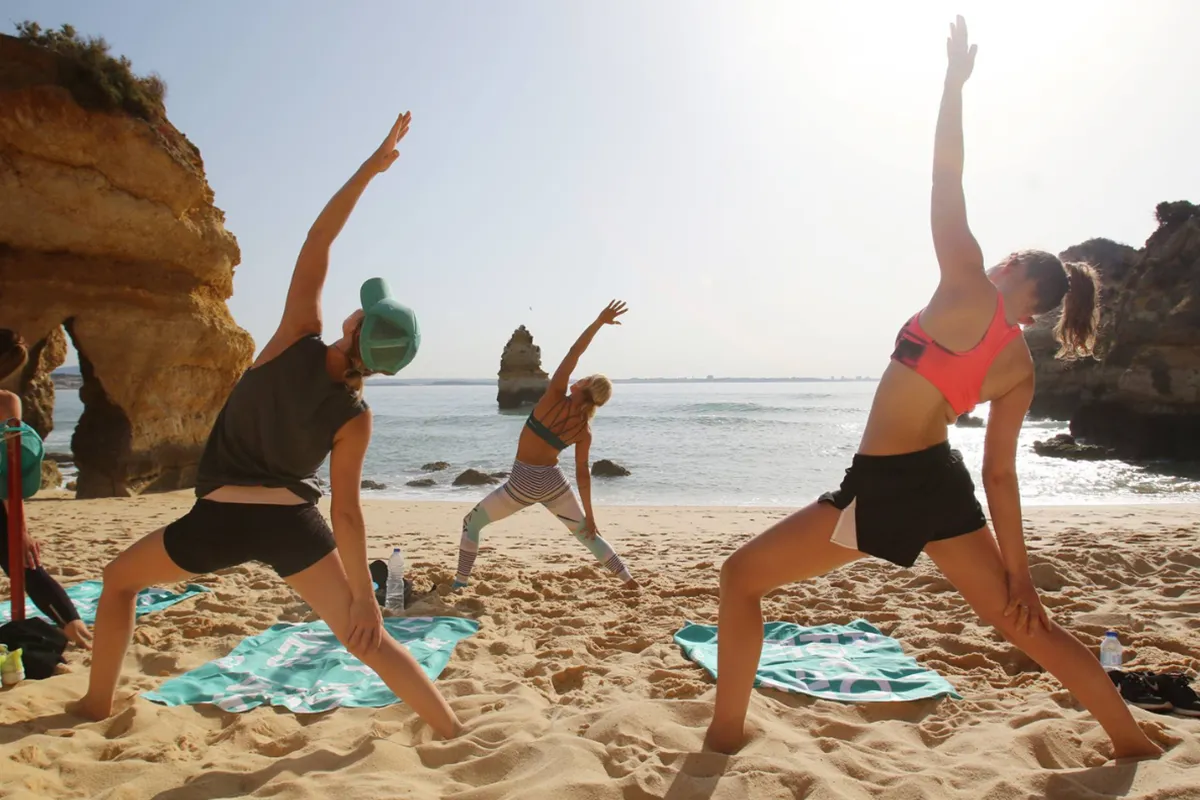
Our guests enjoying yoga on our Portugal Surf Camp
Step 5: Get Physically Ready Before You Go
Surfing is one of the most physically demanding sports out there — and the fitter you arrive, the more waves you’ll catch. Most people are surprised by just how much effort goes into paddling. Building your strength and fitness before your trip means you’ll surf longer, recover faster and seriously reduce your risk of injury.
Here’s what to focus on:
Upper Body Strength
Paddling is everything in surfing. Strong shoulders, triceps and chest muscles mean you can paddle harder for longer without burning out in the lineup. Think push ups, tricep dips, shoulder taps, burpees and swimming.
Core Stability
Your core is what keeps you upright and in control on the board — through every pop up, turn and wipeout. Planks, mountain climbers, bear crawls, rotational twists and farmers carries are all brilliant for building surf-specific core strength.
Mobility
Don’t underestimate this one. Yoga and Pilates are genuinely game changing for surfers — improving your flexibility, balance and body awareness in the water. Even 20 minutes a few times a week before your trip makes a real difference.
Cardio Endurance
Surfing in tropical conditions is intense. Building your cardiovascular fitness before you go — through swimming or rowing — means you won’t be gasping after your first few waves. Swimming in particular is brilliant as it mimics the paddling motion perfectly.
Want to get properly prepped? We’ve built a whole Training to Surf Series on our YouTube channel with everything you need to get surf-ready before your next trip — check it out here .
Step 6: Pack! Essential Surf Gear for Tropical Destinations – Don’t leave home without these!
Packing your surf kit for a tropical trip isn’t just about throwing your board in a bag and hoping for the best. Here’s your non-negotiable kit list:
Your own board — now is not the time to try something new. Bring the one you know and love 🏄♀️
A leash in good condition — check it before you pack it. A snapped leash in tropical surf is not fun for anyone
Rash guard or surf suit — reef, sun and board rash are all very real. Cover up
Reef-safe sunscreen — because the ocean looks after us, so we look after it
Warm water surf wax — cold water wax in tropical heat = a very slippery board
Fin key and spare fins — trust us, you do not want to be hunting for a fin key in a foreign country
Board repair kit — dings happen. Be ready
How to Travel with Surfboards – Don’t wing this one!
Travelling with a surfboard can feel like a mission but get it right and it’s really not that bad. The number one investment? A quality padded travel bag or coffin bag — your board will thank you when it arrives in one piece.
We’ve actually put together a full guide on exactly how to pack your board bag so you don’t have to figure it out yourself — check it out here 🙌
A few golden rules before you zip it up:
Pull those fins out first — snapped fins are heartbreaking and very avoidable 😂
Pad those rails well — they’re more vulnerable than you think
Give the nose and tail extra love — wrap them up properly
Stuff any gaps with soft clothing — your hoodies have never been more useful
Our number one airport tip? Get there early. Checking in with a board bag takes longer than standard luggage and if you’re travelling during peak holiday season, those queues can be seriously long. Give yourself the buffer and start your trip stress free!
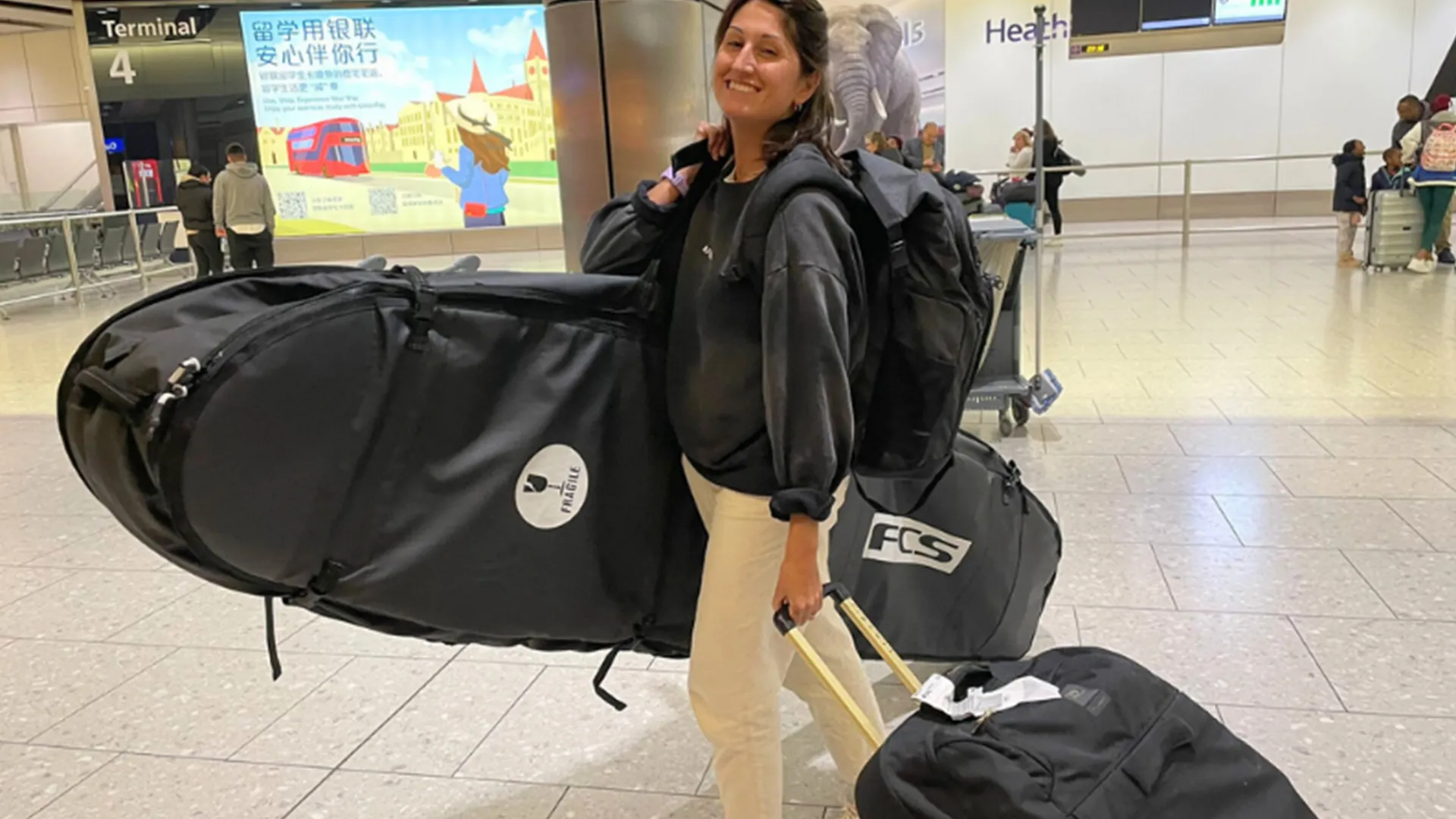
Founder, Rachel navigating airports, large board bags and heavy suitcases pre W+W trips. Rach’s tip – get a board bag with wheels!
What to Pack — Clothes Edition
Less is more when it comes to packing clothes for a tropical surf trip — you’ll live in your swimwear and boardshorts most of the time anyway. Here’s what we’d definitely throw in the bag:
Swimwear x3 — you’ll want options, trust us. I usually include 1x bikini, 1 x full swimsuit and 1 x surf suit.
2/3 pairs of shorts/boardshorts for your daily uniform!
Rash guards x2 — in and out of the water – long sleeve are great for extra protection.
Surf leggings – great for sun and if you’re experiencing any chafing!
A couple of light dresses or linen shorts — for evenings out and exploring.
One slightly nicer outfit — just in case!
Flip flops and a pair of trainers — wear the trainers to travel in!
A light layer — for air-conditioned restaurants that are inexplicably freezing (wear this to the airport).
A Hat!
Underwear — we probably didn’t need to say this but here we are.
And the absolute hero of your suitcase — a sarong!
Honestly, a sarong might be the single most useful thing you pack, and if you don’t have one, you can usually buy one upon arrival! Don’t underestimate it’s uses:
Beach towel when you can’t be bothered carrying a real one
Changing room on the beach
Wrap skirt for popping to the shops after a surf
Light blanket on a cold plane or bus
Impromptu picnic blanket
Privacy curtain if it’s too bright in your room.
Hair wrap after a session
Emergency beach bag in a pinch!
One piece of fabric. Infinite uses. Never leave home without one!
Flying Tips – Feel Great on Arrival
Hydration is non-negotiable, bonus if you can throw some electrolytes in there too.
Spoiler alert – avoid excess alcohol
Book a seat with extra leg room if you can – those ones by the toilet are a hidden gem and make sure you’re getting up to stretch regularly throughout the flight
Compression socks – not the sexiest look but your legs will be so happy when you hit the water.
Sleep with a neck pillow
Switch to destination time the moment you board – fight the jet lag before it fights you
Skin Protection Whilst Surfing- Don’t Get Caught Out!
Here’s the thing about tropical sun – it will get you even when you least expect it. Overcast day? Still burning. In the water? Still burning. Don’t be fooled. Load up on mineral sunscreen, throw on a UV top and slap some zinc on your face – it’s basically a surfer’s war paint anyway!
Sun timing: Try to avoid surfing between 11am and 3pm when the sun is at its strongest — early morning sessions are the best anyway.
Reapplication: Reapply sunscreen every time you come out of the water — it washes off more than you think!
Lips: Don’t forget your lips! A good SPF lip balm is a total game changer!
Eyes: Invest in a good pair of polarised sunglasses for when you’re out of the water — your eyes need protection too
After sun: After sun is your best friend at the end of the day — get into the habit of applying it every evening to keep your skin happy
Rash vest tip: A long sleeve rash vest gives you way more coverage than sunscreen alone — and means less reapplying mid session
Zinc tip: Coloured zinc is not just fun — it actually tends to stay on better in the water than the clear stuff
IMPORTANT tip: Check the expiry date on your suncream! Out of date = separated oils = crispy surfer. Not the vibe
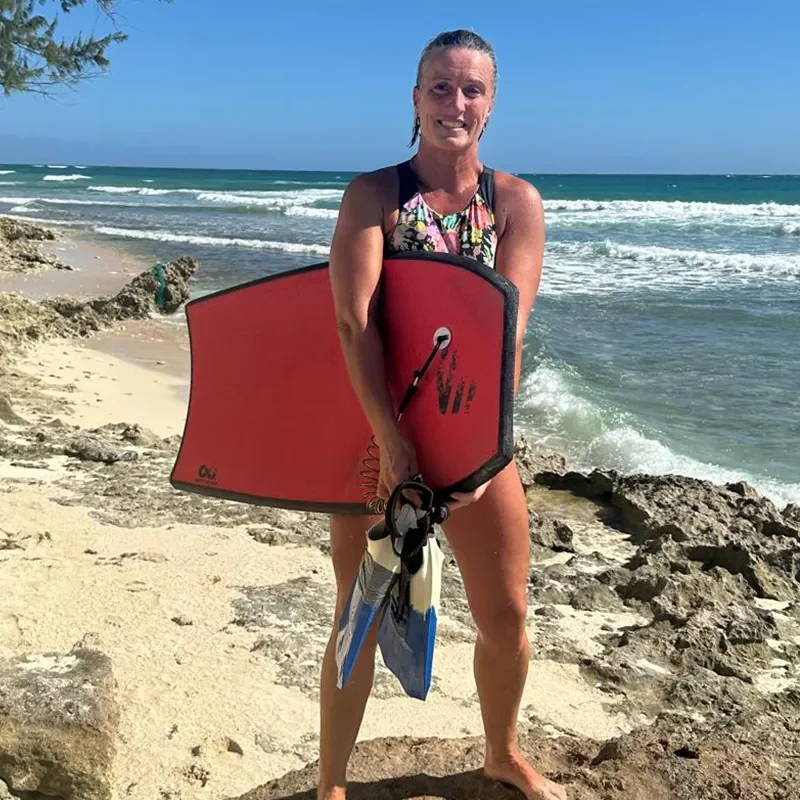
Living our best life in Barbados – waves, sunshine and Zinc on point!
Hair Care for Surfers – because salt water is not your hair’s friend
Let’s be honest, your hair is going to take a beating. Salt, sun and surf are a gorgeous combination for the ocean – not so much for your locks. Here’s how to keep it happy:
Before surfing:
Rinse with fresh water first — wet hair absorbs less salt water 🙌
Slather on some conditioner or oil as a barrier (coconut oil is your best friend here)
Tie it up with a soft hair tie — no bobbles that snap or crease!
After surfing:
Rinse immediately — don’t let that salt water sit
Hit it with something hydrating before it dries out
Ditch the tight hair ties while it recovers — your hair has been through enough! 😉
You can read our full hair care guide for surfers here.
Surf Trip First Aid Kit Essentials
Waterproof plasters (for reef cuts and blisters)
Antiseptic wipes or spray (to clean wounds quickly)
Pain relief (paracetamol or ibuprofen)
Tweezers (for splinters, sea urchins, or debris)
Electrolyte sachets (to stay hydrated after long sessions)
Optional extras worth packing:
Zinc or reef-safe sunscreen
Aloe vera or after-sun lotion
Compression bandage (for sprains)
Anti-chafing balm (great for wetsuit rash)
Final Thoughts: The Magic of a Women’s Surf Adventure
A tropical surf trip is so much more than just the waves. It’s the early morning paddle outs with the sun coming up, the friendships formed in the lineup, the moment you catch a wave you never thought you could. It’s confidence you didn’t know you had, freedom you didn’t know you needed and memories you’ll talk about for years.
The preparation might feel like a lot right now — but once you’re out there? Every bit of it was worth it. We’ll see you in the water!
Lisa is one of the most respected figures in women’s bodyboarding. A former European Bodyboarding Champion and World Surf Life Saving Champion, she brings decades of experience, knowledge, and calm confidence into the water. As part of the Women + Waves and Bodyboard Holidays team, Lisa coaches with warmth, precision, and a deep understanding of progression at every level. She is the trip leader for the UK Ladies Coaching Weekends and the annual Cornwall Bodyboard Retreat, where her coaching and leadership consistently leave a lasting impact.
Join any of our UK coaching weekends or international trips
Can I Really Go on a Solo Surf Trip as a Woman? Here’s How.
Have you ever wondered: Can I really do a surf trip on my own? Yes. You can. A year after having my third child, at forty years old, I realised it was now or never if I wanted to learn to surf properly. So I booked a solo surf trip – terrified and exhilarated in […]
Blog
29 October 2025
Am I Experienced Enough To Surf In Bali?
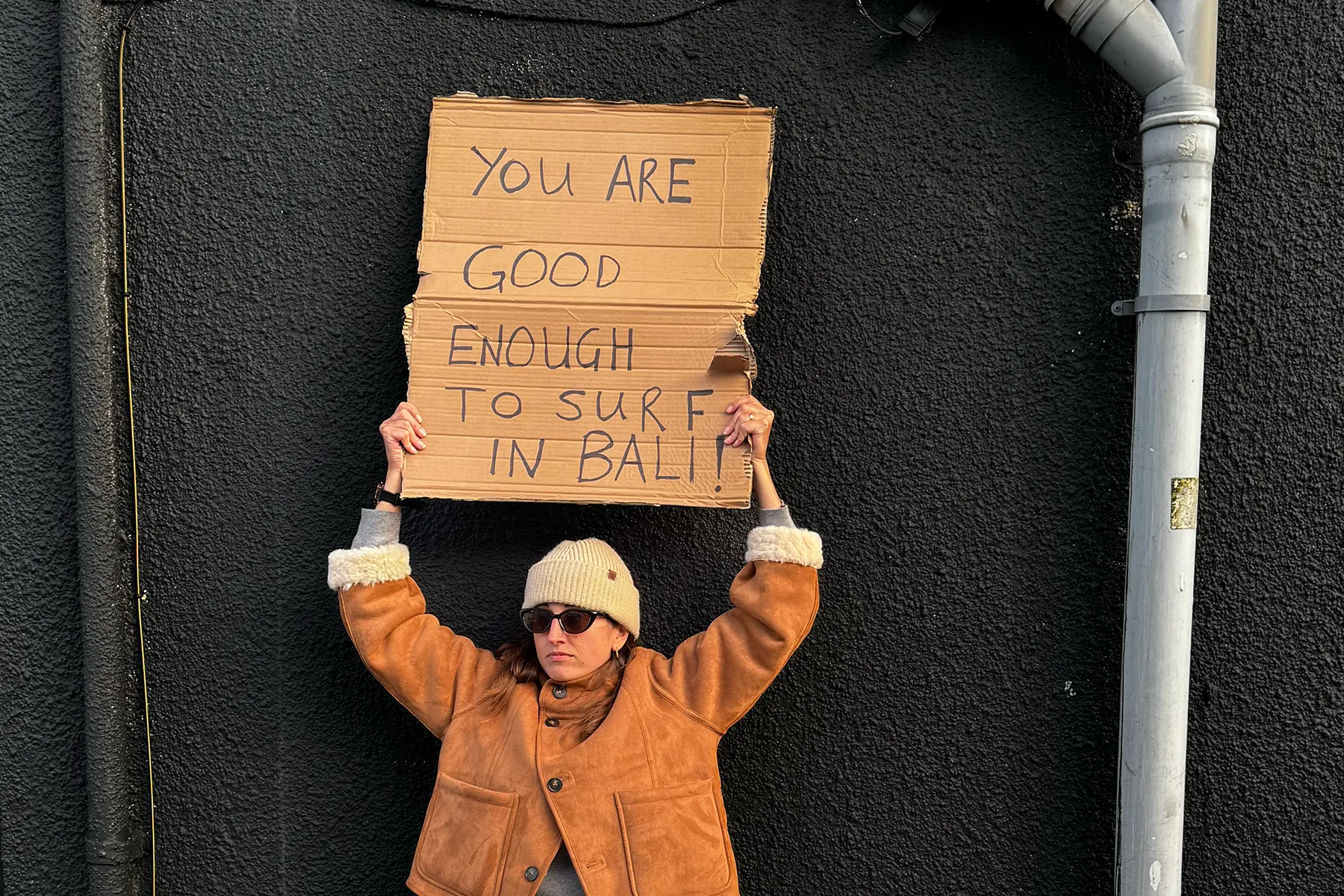
“Is Bali good for beginner surfers?” It’s one of the questions we get asked most often. Bali is legendary for world-class waves and crystal-clear water, but for many women the thought of surfing there feels intimidating. Let’s set the record straight. With the right coaching and the right company, Bali is absolutely for you. Whether […]
Blog
20 May 2024
Top Tips for Pre Surfing Rituals
Top tips from Women + Waves lead coach Courtenay for pre-surfing rituals. Whether you’re gearing up for an epic surfing trip with Women + Waves or heading out for an independent surf session, proper preparation is key to enjoying your time in the waves. Our expert lead surf coach, Courtenay, shares her top tips for […]
Join the community and be the first to receive new trip launches, competitions and special deals! Receive £50 off your first international coaching holiday or £25 off your first coaching weekend. Fortnightly newsletter with surfing tips, give aways, guides, discount codes and news!